

| Distributor | Stock | Pricing | MOQ | PKG | Lead Time | Date Code | On Order Quantity | On Order Delivery | |
|---|---|---|---|---|---|---|---|---|---|
|
13,690 pcs
|
13690 pcs | On Request | 1 | On Request | On Request | On Request | On Request | On Request |
| Category | |
| Manufacturer Name | |
| Clock Frequency | |
| Current | |
| Function | |
| Mounting Type | |
| Number of Bits per Element | |
| Number of Elements | |
| Operating Temperature | |
| Output Type | |
| Propagation Delay | |
| Supplier Device Package | |
| Supplier Package | |
| Trigger Type | |
| Type | |
| Voltage |
The MC100EP451MNG from On Semiconductor is a 6-bit fully differential register designed for very high-frequency applications. It operates with a positive edge-triggered clock and includes an asynchronous master reset function. Key electrical characteristics include a typical propagation delay of 450 ps and a maximum operating frequency greater than 3.0 GHz.
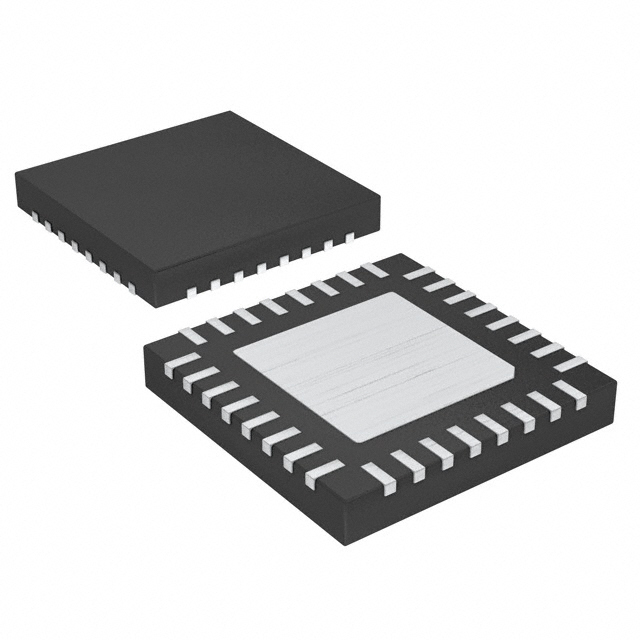
This device supports both PECL and NECL operating modes, with voltage ranges of 3.0 V to 5.5 V for PECL and -3.0 V to -5.5 V for NECL. It features complementary outputs and a D-Type configuration. The register is housed in a 32-QFN (5x5) exposed pad package, suitable for surface mounting.
All inputs have internal pulldown resistors, and differential inputs include an override clamp for signal integrity. Unused differential register inputs can be left open, defaulting to a LOW state. The 100 Series designation indicates the presence of temperature compensation for enhanced performance.
| Qty | Low | High |
|---|---|---|
| 1+ | $0.86 | $0.86 |
Estimated market price range - modelled values for guidance only, not live distributor offers.
The MC100EP451MNG operates from 3.0 V to 5.5 V in PECL mode and from -3.0 V to -5.5 V in NECL mode.
The MC100EP451MNG is housed in a 32-VFQFN Exposed Pad package (32-QFN 5x5 mm).
The operating temperature range is -40°C to 85°C (TA).
The typical propagation delay is 450 ps.
The maximum frequency is greater than 3.0 GHz.
Yes, the device includes a master reset function.
The device-to-device skew is 35 ps typical.