

| Distributor | Stock | Pricing | MOQ | PKG | Lead Time | Date Code | On Order Quantity | On Order Delivery | |
|---|---|---|---|---|---|---|---|---|---|
|
962 pcs
|
962 pcs | On Request | 1 | On Request | On Request | On Request | On Request | On Request |
| Category | |
| Manufacturer Name | |
| Available Total Delays | |
| Delay to 1st Tap | |
| Function | |
| Lead Spacing | |
| Mounting Type | |
| Number of Independent Delays | |
| Number of Taps | |
| Operating Temperature | |
| Supplier Device Package | |
| Tap Increment | |
| Tape & Reel | |
| Voltage |
The MC100EP196BMNG from ON Semiconductor is a Programmable Delay Chip (PDC) primarily used for clock deskewing and timing adjustments. It offers a variable delay for differential NECL/PECL input transitions, with additional tunability via the FTUNE pin for fine-tuning delay from 0 to 60 ps.
The delay section is built with a matrix of gates and multiplexers. The delay increment has a digitally selectable resolution of approximately 10 ps, with a total range of up to 10.4 ns. The required delay is selected by 10 data select inputs (D[9:0]) and controlled by the LEN pin. The input pins can accept LVPECL or LVDS level signals, and the device has a fixed minimum delay of 2.2 ns.
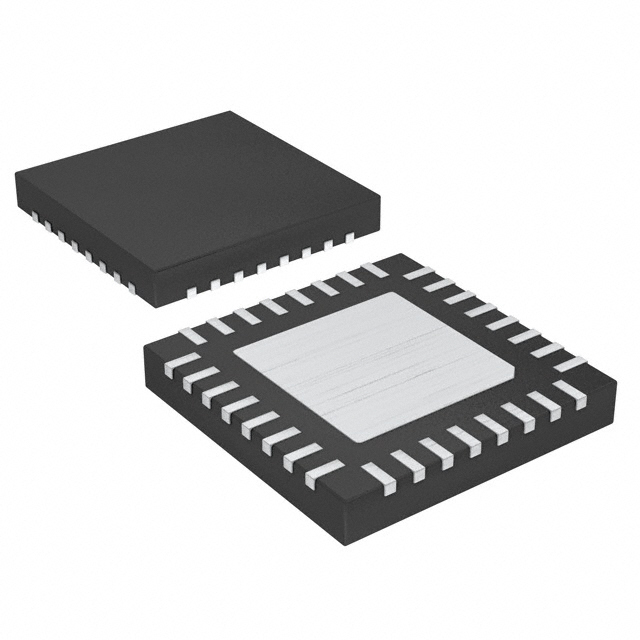
This chip operates within a voltage range of 3V to 3.6V and has an operating temperature range of -40°C to 85°C. It is available in a 32-QFN (5x5) package, specifically a 32-VFQFN Exposed Pad, and is designed for surface mount applications.
Key specifications include 1024 taps, a delay to the first tap of 2.5 ns, and a total available delay range from 2.5 ns to 13 ns. The tap increment is 10 ps.
| Qty | Low | High |
|---|---|---|
| 1+ | $3.00 | $3.00 |
Estimated market price range - modelled values for guidance only, not live distributor offers.
The operating voltage range is 3V to 3.6V.
The operating temperature range is -40°C to 85°C.
It is supplied in a 32-VFQFN Exposed Pad package.
The available total delay range is from 2.5 ns to 13 ns.
The device has 1024 taps.
The tap increment resolution is 10 ps.
Yes, the FTUNE pin allows for fine-tuning of the output delay from 0 to 60 ps.