

| Distributor | Stock | Pricing | MOQ | PKG | Lead Time | Date Code | On Order Quantity | On Order Delivery | |
|---|---|---|---|---|---|---|---|---|---|
|
9,040 pcs
|
9040 pcs | On Request | 1 | On Request | On Request | On Request | On Request | On Request |
| Category | |
| Manufacturer Name | |
| Clock Sync | |
| Control Features | |
| Function | |
| Mounting Type | |
| Number of Outputs | |
| Operating Temperature | |
| Output Configuration | |
| Output Phases | |
| Output Type | |
| Supplier Device Package | |
| Synchronous Rectifier | |
| Topology | |
| Voltage |
The MAX741UCAP, manufactured by Analog Devices Inc., is a versatile DC DC Switching Controller designed for various power management applications. This component supports both step-up and step-down functions, operating with a wide input voltage range from 2.7V to 15.5V.
Key electrical features include a single output phase with a transistor driver output type, capable of positive or negative configurations. It supports synchronous rectification and offers clock synchronization capabilities, along with control features like frequency control and soft start. The device operates within a temperature range of 0°C to 70°C (TA).
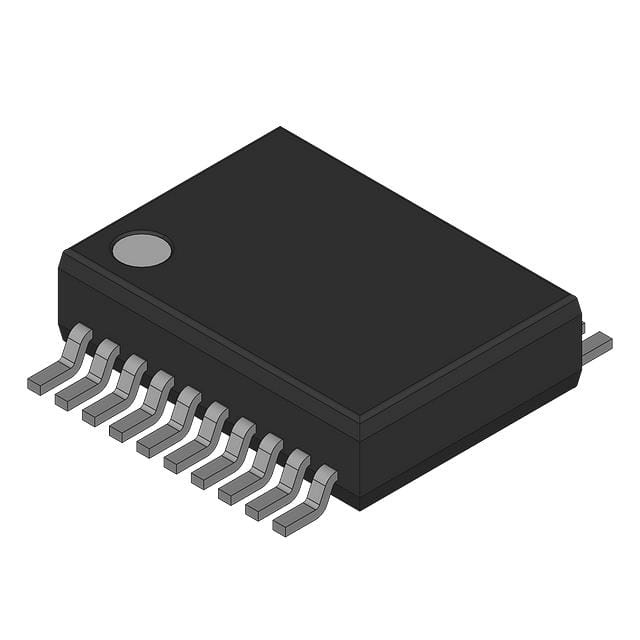
Packaged in a 20-SSOP format, the MAX741UCAP is designed for surface mount applications. Its topology supports buck and boost configurations, making it suitable for designs requiring flexible voltage regulation. The part number is MAX741UCAP, and it is identified as a DC DC Switching Controller within the Power Management (PMIC) category.
This component is suitable for applications requiring efficient and reliable voltage conversion. Its features make it a valuable part for engineers designing power supplies and related circuitry.
| Qty | Low | High |
|---|---|---|
| 1+ | $0.78 | $0.78 |
Estimated market price range - modelled values for guidance only, not live distributor offers.
2.7V to 15.5V.
20-SSOP (0.209", 5.30mm Width) surface-mount package.
0°C to 70°C.
Buck (step-down) and boost (step-up).
Yes, it supports clock synchronization.
Frequency control and soft start.
No, it is not a synchronous rectifier.