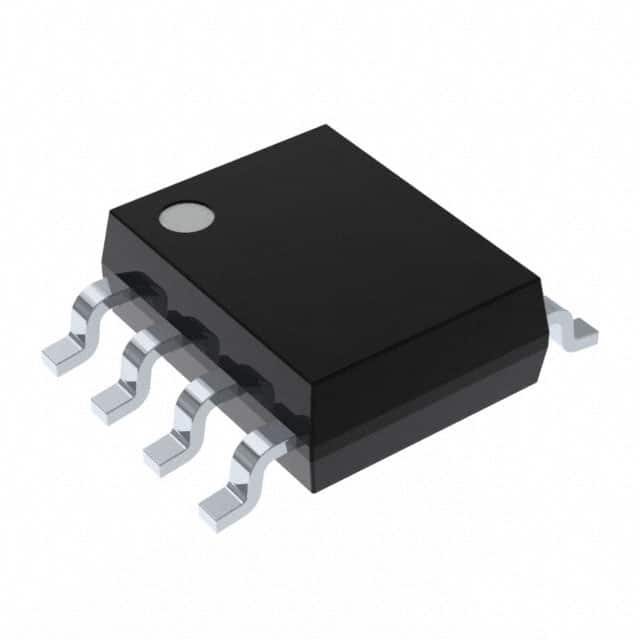
The MAX7407ESA+T is an 8th-order, lowpass, elliptic, switched-capacitor filter designed for low-power anti-aliasing and post-DAC filtering applications. It operates from a single 2.7V to 3.6V supply and draws minimal current, featuring a shutdown mode that reduces consumption to 0.2µA.
This filter offers a clock-tunable corner frequency ranging from 1Hz to 10kHz, with a 100:1 clock-to-corner ratio for precise control. The MAX7407 provides 60dB of stopband rejection and a sharp rolloff with a transition ratio of 1.2. It includes an offset adjustment pin for DC output level control.
Available in an 8-pin SOIC package, the MAX7407ESA+T is suitable for surface mount applications. Its design simplifies corner-frequency selection by setting the clock frequency, making it ideal for applications such as ADC anti-aliasing, speech processing, and post-DAC filtering.
Key electrical characteristics include a typical operating current of 2mA and a low output offset of ±5mV. The device supports both self-clocking and external clocking options for flexibility in design.