

| Distributor | Stock | Pricing | MOQ | PKG | Lead Time | Date Code | On Order Quantity | On Order Delivery | |
|---|---|---|---|---|---|---|---|---|---|
|
16,436 pcs
|
16436 pcs | On Request | 1 | On Request | On Request | On Request | On Request | On Request | |
|
2,524 pcs
|
2524 pcs | On Request | 1 | On Request | On Request | On Request | On Request | On Request | |
|
45 pcs
|
45 pcs | On Request | 1 | On Request | On Request | 97G/ | On Request | On Request |
| Category | |
| Manufacturer Name | |
| Current | |
| Function | |
| Mounting Type | |
| Number of Outputs | |
| Operating Temperature | |
| Output Configuration | |
| Output Type | |
| Output Voltage | |
| Quiescent Current | |
| Supplier Device Package | |
| Synchronous Rectifier | |
| Topology | |
| Voltage |
The MAX640ESA is a versatile step-down DC-DC converter designed for high efficiency across various load currents, capable of delivering up to 225mA. It operates with an input voltage range of 4V to 11.5V and features an adjustable output voltage that can be set from 1.3V up to the input voltage. This device utilizes a current-limiting PFM control scheme, providing the benefits of PWM converters while maintaining a low quiescent current of only 10µA.
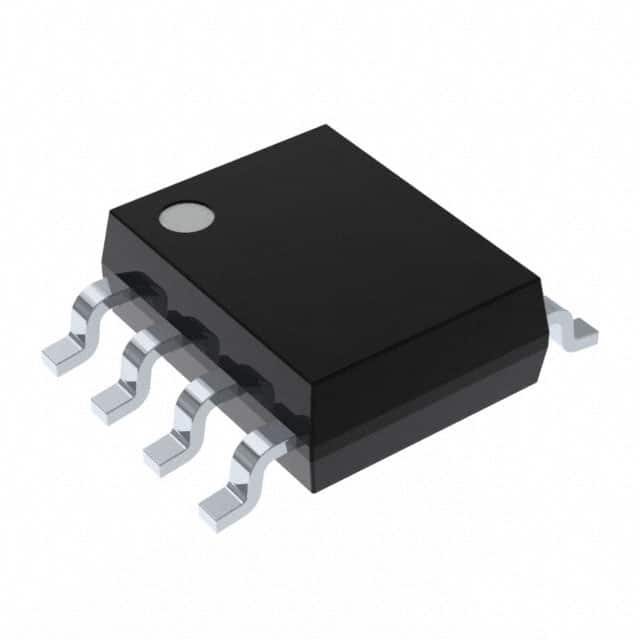
Ideal for applications requiring efficient voltage conversion, the MAX640ESA is suitable for portable instruments and handy-terminals. It is housed in an 8-SOIC package, designed for surface mount installation, making it a compact solution for space-constrained designs. The regulator's internal 1A power MOSFET switch simplifies component count in low- and medium-power applications.
Key electrical characteristics include an input voltage range of 4V to 11.5V and an output current capability of up to 225mA. The output voltage is adjustable, with a minimum fixed voltage of 1.3V. The device operates within a temperature range of -40°C to 85°C.
| Qty | Low | High |
|---|---|---|
| 1+ | $1.08 | $1.08 |
Estimated market price range - modelled values for guidance only, not live distributor offers.
The input voltage range is 4V to 11.5V.
The output voltage is adjustable from 1.3V to 11.5V, with a fixed 3.3V option.
The device provides up to 225mA output current.
The operating temperature range is -40°C to 85°C.
The device is offered in an 8-SOIC surface-mount package.
The quiescent current is 10µA.
No, it is a non-synchronous rectifier design.