

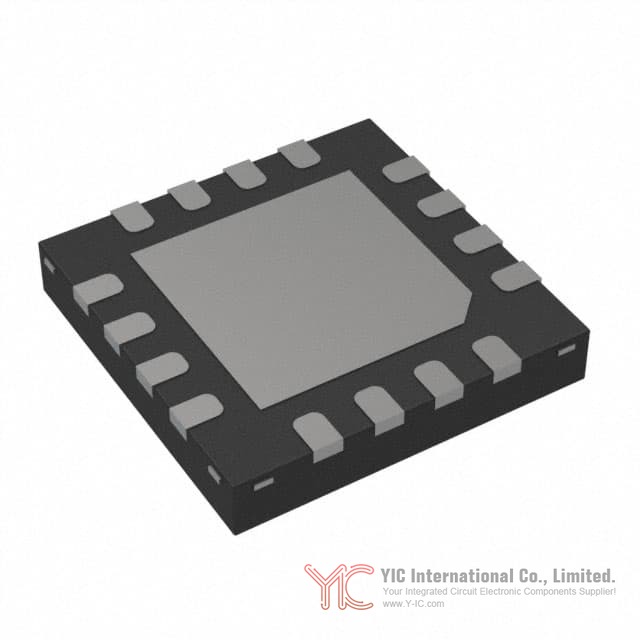
MAX5974AETE+T The MAX5974AETE+T is an active-clamped, current-mode PWM controller designed for Power-over-Ethernet (PoE) powered device applications. It offers programmable switching frequency and duty cycle clamp.
Mfr Part #:

MAX5974AETE+T

Available from 1 distributors
Mfr Name: MAX
MAX
The MAX5974AETE+T is an active-clamped, current-mode PWM controller designed for Power-over-Ethernet (PoE) powered device applications. It offers programmable switching frequency and duty cycle clamp.
Total Stock: 6,498 pcs

MAX5974AETE+T Available from 1 distributor

Authorised
Non-Authorised
Distributor Stock Pricing MOQ PKG Lead Time Date Code On Order Quantity On Order Delivery
Non-Authorised Inventory information
6,498 pcs
6498 pcs On Request 1 On Request On Request 18+ On Request On Request

MAX5974AETE+T Specifications Quick View

Most important parameters for selection – full specs in datasheet.
Category
Manufacturer Name
Mounting Type
Package / Case
Propagation Delay

MAX5974AETE+T Description

Short technical summary and product information.

The MAX5974AETE+T from Analog Devices Inc./Maxim Integrated is an active-clamped, current-mode PWM controller specifically designed for Power-over-Ethernet (PoE) powered device (PD) applications. It supports wide-input-voltage ranges and features like frequency foldback for light-load efficiency and programmable dead time for zero-voltage switching (ZVS).


Key electrical specifications include a programmable switching frequency from 100kHz to 600kHz with ±8% accuracy, and a programmable feed-forward maximum duty-cycle clamp set at 80%. It also features a typical startup supply current of 100μA and fast cycle-by-cycle peak current limit with a typical propagation delay of 35ns. The device includes 115ns current-sense internal leading-edge blanking.


This controller is available in a 16-pin TQFN-EP package, designed for surface mount applications. It operates within a temperature range of -40°C to +125°C, making it suitable for various environmental conditions. The MAX5974A/B variants offer regulation without an optocoupler, while the MAX5974C/D use traditional optocoupler feedback.


Applications include IEEE 802.3af/at compliant PoE PDs, high-power PDs beyond standard specifications, active-clamped forward DC-DC converters, IP phones, wireless access nodes, and security cameras.

MAX5974AETE+T Quick Information

Product Type: PWM Controller
Series: MAX5974
Canonical Name: MAX5974AETE+T Active-Clamped, Spread-Spectrum, Current-Mode PWM Controller
Subcategory: PoE Controller

MAX5974AETE+T Compliance

RoHS Status: RoHS Compliant
Moisture Sensitivity Level (MSL): 1 Unlimited
REACH Status: REACH Unaffected

MAX5974AETE+T Features

  • Active-clamped, current-mode PWM controller
  • Programmable switching frequency 100kHz to 600kHz
  • Programmable feed-forward duty-cycle clamp
  • Frequency foldback for light-load efficiency
  • 16-pin TQFN-EP package for surface mounting

MAX5974AETE+T Applications

  • Power-over-Ethernet (PoE) powered devices
  • Active-clamped forward DC-DC converters
  • IP phones and wireless access nodes
  • Security cameras and high-power PDs

MAX5974AETE+T FAQs

7 frequently asked questions generated from this part’s specifications.
What is the operating temperature range of the MAX5974AETE+T?

The operating temperature range is -40°C to +125°C.

What is the package type of the MAX5974AETE+T?

The MAX5974AETE+T is available in a 16-pin TQFN-EP package.

What is the programmable switching frequency range of the MAX5974AETE+T?

The switching frequency is programmable from 100kHz to 600kHz, with synchronization up to 1.2MHz.

What is the maximum duty-cycle clamp of the MAX5974AETE+T?

The feed-forward maximum duty-cycle clamp is 80%.

What is the typical startup supply current of the MAX5974AETE+T?

The typical startup supply current is 100μA.

What is the current-sense leading-edge blanking time of the MAX5974AETE+T?

The current-sense internal leading-edge blanking is 115ns.

What is the propagation delay for the cycle-by-cycle peak current limit of the MAX5974AETE+T?

The typical propagation delay is 35ns.

Home
Account

Categories