

| Distributor | Stock | Pricing | MOQ | PKG | Lead Time | Date Code | On Order Quantity | On Order Delivery | |
|---|---|---|---|---|---|---|---|---|---|
|
2,500 pcs
|
2500 pcs | On Request | 1 | On Request | On Request | On Request | On Request | On Request |
| Category | |
| Manufacturer Name | |
| Data Interface | |
| Differential Output | |
| INL | |
| Lead Spacing | |
| Mounting Type | |
| Number of Bits | |
| Number of D | |
| Operating Temperature | |
| Output Type | |
| Reference Type | |
| Settling Time | |
| Supplier Device Package | |
| Supplier Package | |
| Supply Current | |
| Tape & Reel | |
| Voltage |
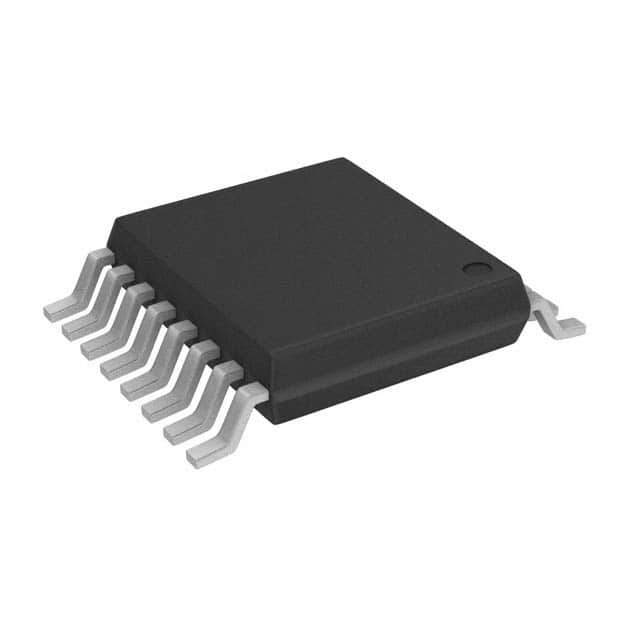
The MAX5309EUE+ is a low-power, 10-bit, eight-channel, voltage-output digital-to-analog converter (DAC) housed in a compact 16-pin TSSOP package. It operates from a wide supply voltage range of +2.7V to +5.5V, making it suitable for low-voltage applications. The device features ultra-low glitch energy of less than 2nV-s, ideal for digital control of fast-response systems.
With a 3-wire SPI, QSPI, or MICROWIRE-compatible serial interface, the MAX5309EUE+ allows for independent or simultaneous updates of input and DAC registers. It boasts a fast 5µs settling time and a software-selectable shutdown mode that reduces supply current to less than 1µA. The operating temperature range is -40°C to +85°C.
Applications include gain and offset adjustment, power amplifier control, process control I/O boards, portable instrumentation, and control of optical components. The DACs are double-buffered to minimize digital-noise feedthrough. The MAX5309 variant includes a hardware reset input (CLR) to clear all registers and DACs to zero.
| Qty | Low | High |
|---|---|---|
| 1+ | $8.70 | $8.70 |
Estimated market price range - modelled values for guidance only, not live distributor offers.
The MAX5309EUE+ has a resolution of 10 bits.
The MAX5309EUE+ features 8 channels.
The operating voltage range is 2.7V to 5.5V.
The operating temperature range is -40°C to 85°C.
The MAX5309EUE+ is supplied in a 16-TSSOP package.
The settling time is typically 5µs.
The glitch energy is less than 2nV-s.