

| Distributor | Stock | Pricing | MOQ | PKG | Lead Time | Date Code | On Order Quantity | On Order Delivery | |
|---|---|---|---|---|---|---|---|---|---|
|
2,000 pcs
|
2000 pcs | On Request | 1 | On Request | On Request | On Request | On Request | On Request |
| Category | |
| Manufacturer Name | |
| Data Rate | |
| Duplex | |
| Features | |
| Lead Spacing | |
| Logic Voltage | |
| Mounting Type | |
| Number of Drivers | |
| Operating Temperature | |
| Output Voltage | |
| Protocol | |
| Receiver Hysteresis | |
| Supplier Device Package | |
| Supplier Package | |
| Type | |
| Voltage |
The Texas Instruments MAX3223EIDWR is a dual channel RS-232 transceiver designed for reliable serial communication. It features two drivers and two receivers, operating with a supply voltage range of 3V to 5.5V and supporting data rates up to 500kbps.
This transceiver meets or exceeds TIA/EIA-232-F and ITU v.28 standards, providing an essential interface between asynchronous communication controllers and serial port connectors. It includes ±15kV ESD protection on its RS-232 bus pins, safeguarding against electrostatic discharge.
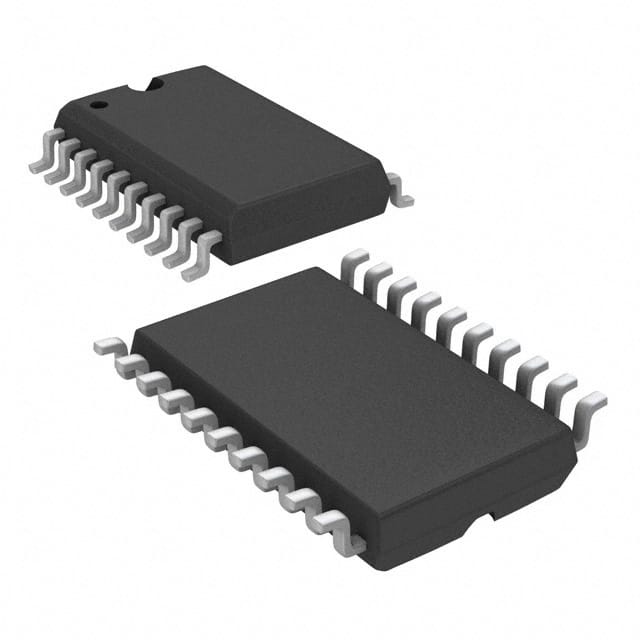
The MAX3223EIDWR is available in a 20-SOIC package and is suitable for surface mounting. It operates within an industrial temperature range of -40°C to 85°C. Key features include auto-powerdown functionality and a low standby current of 1µA typical, making it an efficient choice for various embedded systems and communication interfaces.
| Qty | Low | High |
|---|---|---|
| 1+ | $1.52 | $1.52 |
Estimated market price range - modelled values for guidance only, not live distributor offers.
The MAX3223EIDWR operates with a supply voltage range of 3V to 5.5V.
The MAX3223EIDWR is supplied in a 20-SOIC package.
The operating temperature range for the MAX3223EIDWR is -40°C to 85°C.
The MAX3223EIDWR is RoHS3 Compliant.
The MAX3223EIDWR supports data rates up to 500kbps.
The MAX3223EIDWR has 2 drivers and 2 receivers.
The MAX3223EIDWR provides ±15kV ESD protection via Human-body model (HBM) and ±15kV via IEC61000-4-2 air-gap discharge.