

| Distributor | Stock | Pricing | MOQ | PKG | Lead Time | Date Code | On Order Quantity | On Order Delivery | |
|---|---|---|---|---|---|---|---|---|---|
|
861 pcs
|
861 pcs | On Request | 1 | On Request | On Request | On Request | On Request | On Request |
| Category | |
| Manufacturer Name | |
| Data Rate | |
| Mounting Type | |
| Number of Drivers | |
| Operating Temperature | |
| Protocol | |
| Receiver Hysteresis | |
| Supplier Device Package | |
| Supplier Package | |
| Type | |
| Voltage |
The MAX3096CEE+T from Analog Devices is a rugged, low-power, quad RS-422/RS-485 receiver with integrated electrostatic discharge (ESD) protection. Designed for use in demanding applications, this receiver offers robust protection against ESD events, including ±15kV via IEC 1000-4-2 Air-Gap Discharge and ±8kV via Contact Discharge, as well as ±15kV using the Human Body Model.
This device operates from a single +3V to +3.6V supply and supports data rates up to 10Mbps. It features a fail-safe function that guarantees a logic-high output if the input is open circuit. The receiver inputs have a quarter-unit-load impedance, allowing up to 128 receivers on a bus. Complementary enable inputs can place the device into a 1nA low-power shutdown mode.
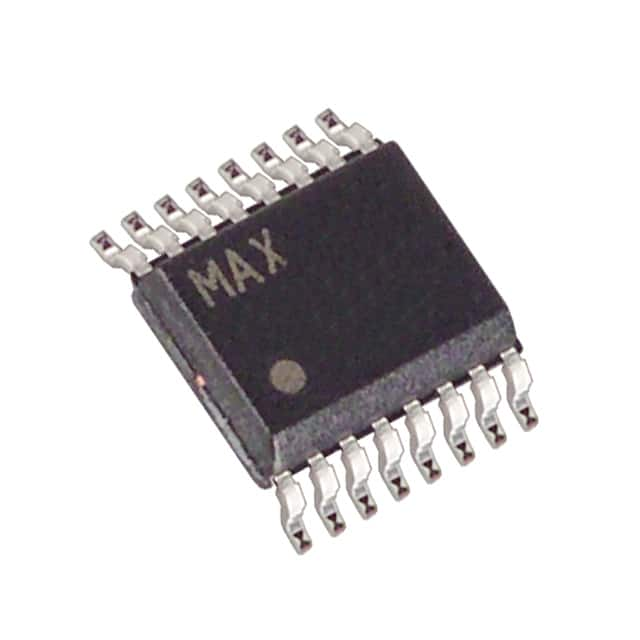
The MAX3096CEE+T is supplied in a 16-pin QSOP package, suitable for surface mounting. Its guaranteed propagation-delay tolerance ensures device-to-device matching across production lots. This component is an ideal choice for telecommunications equipment, rugged bus receiver applications, and level translators where reliability and protection are critical.
Key electrical characteristics include a typical operating supply current of 2.4mA and receiver hysteresis of 45mV. The operating temperature range is 0°C to 70°C.
| Qty | Low | High |
|---|---|---|
| 1+ | $1.44 | $1.44 |
Estimated market price range - modelled values for guidance only, not live distributor offers.
The MAX3096CEE+T is a quad RS-422/RS-485 receiver.
The MAX3096CEE+T operates from a 3V to 3.6V supply.
The operating temperature range for the MAX3096CEE+T is 0°C to 70°C.
The MAX3096CEE+T is supplied in a 16-QSOP package.
The MAX3096CEE+T supports a data rate of 10Mbps.
The MAX3096CEE+T offers ±15kV ESD protection via IEC 1000-4-2 Air-Gap Discharge and ±8kV via Contact Discharge, and ±15kV using the Human Body Model.