

| Distributor | Stock | Pricing | MOQ | PKG | Lead Time | Date Code | On Order Quantity | On Order Delivery | |
|---|---|---|---|---|---|---|---|---|---|
|
1 pcs
|
1 pcs | On Request | 1 | On Request | On Request | On Request | On Request | On Request |
| Category | |
| Manufacturer Name | |
| Antenna Connector | |
| Applications | |
| Current | |
| Data Interface | |
| Frequency | |
| Mounting Type | |
| Operating Temperature | |
| Sensitivity | |
| Supplier Device Package | |
| Supplier Package | |
| Voltage |
The MAX2160ETL+T by Analog Devices / Maxim Integrated is an RF Receiver IC designed for Japanese mobile digital TV (ISDB-T single-segment) applications. It operates within the UHF band, covering a frequency range from 470MHz to 770MHz, and directly converts signals to a low-IF. This device integrates an LNA, RF variable-gain amplifiers, I/Q downconverting mixers, and low-IF variable-gain amplifiers, providing significant image rejection and gain control range.
Key electrical specifications include a typical low noise figure of less than 4dB and a high dynamic range from -98dBm to 0dBm. It supports both high-side and low-side local oscillator injection and features integrated VCO, tank circuits, and a frequency synthesizer. The device operates from a single +2.7V to +3.3V supply voltage and consumes 44mA.
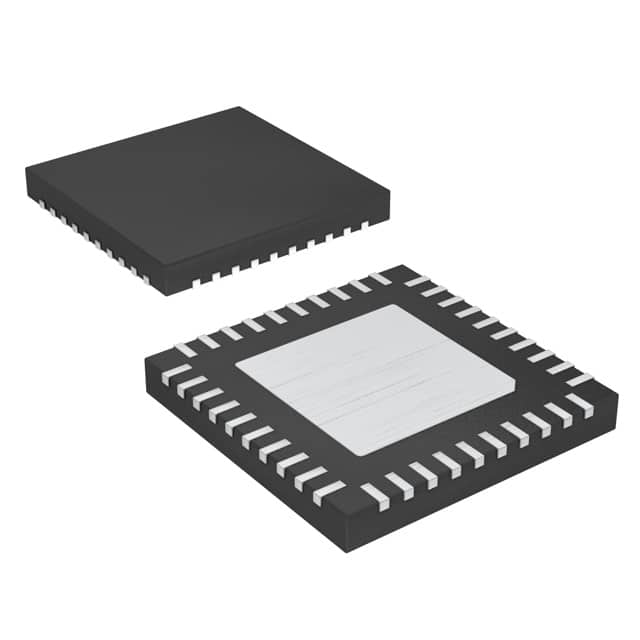
The MAX2160ETL+T is available in a 40-pin Thin QFN package with an exposed pad, suitable for surface mounting. It operates across a temperature range of -40°C to +85°C. This tuner IC is ideal for integration into portable devices requiring mobile TV reception capabilities.
| Qty | Low | High |
|---|---|---|
| 1+ | $0.99 | $0.99 |
Estimated market price range - modelled values for guidance only, not live distributor offers.
The operating frequency range is from 470MHz to 770MHz.
The device operates with a single supply voltage from 2.7V to 3.3V.
The operating temperature range is -40°C to +85°C.
The typical noise figure is less than 4dB.
The sensitivity is -98dBm.
It is supplied in a 40-WFQFN Exposed Pad package.