

| Distributor | Stock | Pricing | MOQ | PKG | Lead Time | Date Code | On Order Quantity | On Order Delivery | |
|---|---|---|---|---|---|---|---|---|---|
|
51,657 pcs
|
51657 pcs | On Request | 1 | On Request | On Request | On Request | On Request | On Request |
| Category | |
| Manufacturer Name | |
| Clock Sync | |
| Control Features | |
| Duty Cycle (Max) | |
| Efficiency | |
| Frequency | |
| Function | |
| Mounting Type | |
| Number of Outputs | |
| Operating Temperature | |
| Output Configuration | |
| Output Phases | |
| Output Type | |
| Quiescent Current | |
| Supplier Device Package | |
| Synchronous Rectifier | |
| Topology | |
| Voltage |
The MAX1744AUB+T is a step-down DC-DC controller designed by Analog Devices (formerly Maxim Integrated) for high-voltage applications. It can handle input voltages up to 36V and operates with a maximum duty cycle of 100%, enabling low dropout voltage.
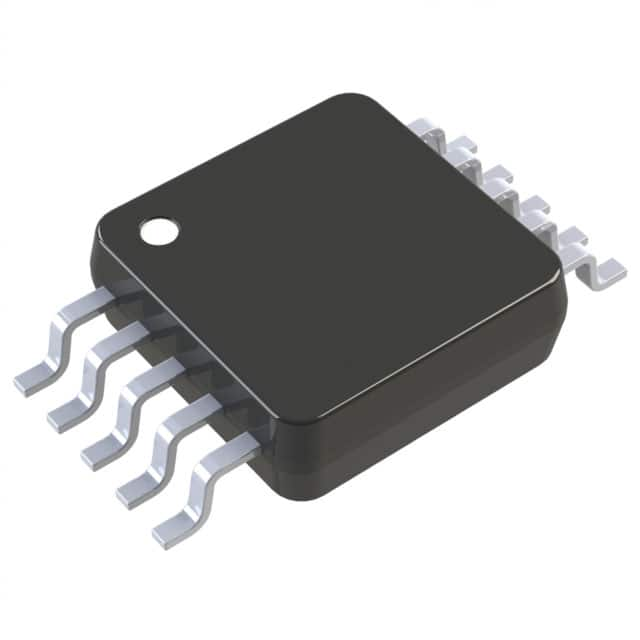
This controller utilizes a proprietary current-limited control scheme for efficient operation at both light and full loads. Its maximum switching frequency of 330kHz allows for the use of small external components, making it suitable for space-constrained designs. The MAX1744AUB+T is available in a compact 10-pin μMAX package.
Key electrical specifications include an input voltage range of 4.5V to 36V, a switching frequency up to 330kHz, and a maximum duty cycle of 100%. It offers an output configuration for positive voltage and features an enable control. The operating temperature range is -40°C to 125°C (TJ).
Applications for the MAX1744AUB+T include automotive electronics, telecom systems, wall-cube-powered devices, and industrial control systems. Its robust design and wide operating voltage make it a versatile choice for various power management needs.
| Qty | Low | High |
|---|---|---|
| 1+ | $0.78 | $0.78 |
Estimated market price range - modelled values for guidance only, not live distributor offers.
The input voltage range is 4.5V to 36V.
It is available in a 10-uMAX/uSOP (10-TFSOP/10-MSOP) surface-mount package.
It operates over a junction temperature range of -40°C to 125°C.
The maximum switching frequency is 330kHz.
It provides a single output.
It uses a buck (step-down) topology with a transistor driver output.
No, it does not use a synchronous rectifier.