

| Distributor | Stock | Pricing | MOQ | PKG | Lead Time | Date Code | On Order Quantity | On Order Delivery | |
|---|---|---|---|---|---|---|---|---|---|
|
15 pcs
|
15 pcs | On Request | 1 | On Request | On Request | On Request | On Request | On Request |
| Category | |
| Manufacturer Name | |
| Applications | |
| Current | |
| Mounting Type | |
| Operating Temperature | |
| Supplier Device Package | |
| Supplier Package | |
| Voltage |
The MAX17000ETG+T from Analog Devices (formerly Maxim Integrated) is a comprehensive power-management solution specifically designed for DDR, DDR2, and DDR3 memory in notebook computers. It features a proprietary Quick-PWM™ controller for the VDDQ rail, offering high efficiency and a fast 100ns response to load transients. The switching frequency is programmable from 200kHz to 600kHz, allowing for smaller component sizes and optimized efficiency.
This device includes a ±2A source/sink LDO regulator for the VTT memory termination rail, capable of handling fast-changing load bursts. It also incorporates a VTTR reference buffer. The VDDQ output voltage can be preset to 1.8V or 1.5V, or adjusted externally from 1.0V to 2.5V with 1% accuracy over line and load variations.
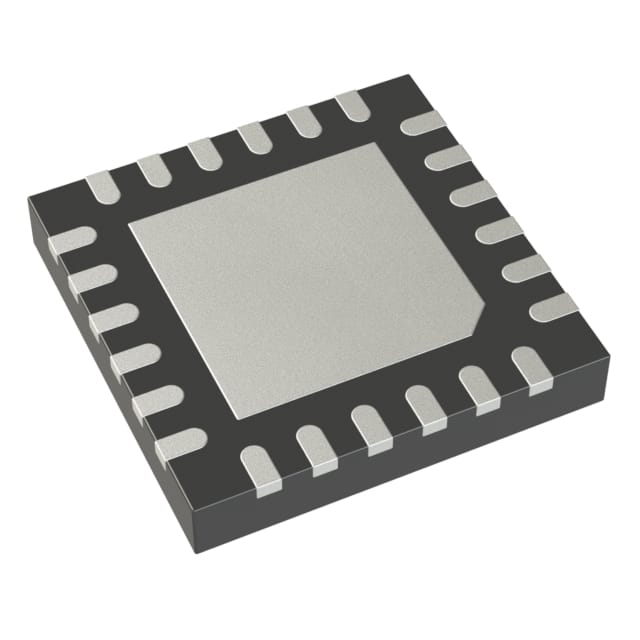
Available in a 24-pin, 4mm x 4mm TQFN package, the MAX17000ETG+T supports various operating modes, including power-efficient SKIP mode, low-noise forced-PWM mode, and a standby mode for memory power saving. It is suitable for applications requiring reliable and efficient memory power supplies, such as in modern notebook computers.
| Qty | Low | High |
|---|---|---|
| 1+ | $0.75 | $0.75 |
Estimated market price range - modelled values for guidance only, not live distributor offers.
The operating voltage range is 4.5V to 5.5V.
The MAX17000ETG+T is available in a 24-TQFN (4x4) package.
The operating temperature range is -40°C to 85°C.
The RoHS status is RoHS3 Compliant.
The Moisture Sensitivity Level is 1 Unlimited.
The VDDQ output voltage can be preset to 1.8V or 1.5V, or adjusted from 1.0V to 2.5V.
The VDDQ rail has a 100ns response to load transients.