

| Distributor | Stock | Pricing | MOQ | PKG | Lead Time | Date Code | On Order Quantity | On Order Delivery | |
|---|---|---|---|---|---|---|---|---|---|
|
10,044 pcs
|
10044 pcs | On Request | 1 | On Request | On Request | On Request | On Request | On Request |
| Category | |
| Manufacturer Name | |
| Applications | |
| Mounting Type | |
| Number of Circuits | |
| Number of Pins | |
| Operating Temperature Range | |
| Supplier Device Package | |
| Technology |
The MAX14588ETE+ is an adjustable overvoltage and overcurrent protection IC designed to safeguard systems against positive and negative input voltage faults up to ±40V. It integrates low on-resistance (190mΩ typical) FETs to minimize power loss and heat dissipation.
The device operates over a wide input voltage range of 4.5V to 36V and can tolerate negative inputs down to -36V. It features adjustable overvoltage lockout (OVLO) from 6V to 36V and undervoltage lockout (UVLO) from 4.5V to 24V, with factory preset thresholds of 33V and 19V respectively. The current limit is programmable from 0.15A to 1A, and the fault response can be configured as autoretry, latch-off, or continuous mode. A 21ms blanking time prevents nuisance trips.
The MAX14588ETE+ includes reverse current flow control and thermal overload protection, enhancing system reliability. It is suitable for industrial applications such as sensor systems, condition monitoring, factory sensors, process analytics, and process instrumentation.
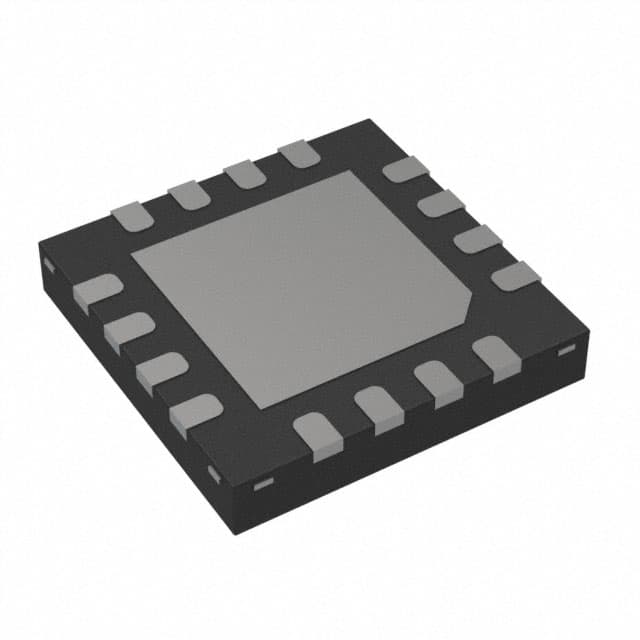
The device is housed in a compact 16-pin TQFN package measuring 3mm x 3mm with an exposed pad for efficient thermal management. It operates over the extended temperature range of -40°C to +125°C and has a thermal resistance of 48°C/W (θJA) and 10°C/W (θJC).
The input voltage range is 4.5V to 36V.
It is available in a 16-WFQFN Exposed Pad package, also known as 16-TQFN (3x3mm).
-40°C to +125°C.
It is listed as RoHS3 compliant.
The adjustable OVLO range is 6V to 36V, with a factory preset of 33V.
The current limit is programmable from 0.15A to 1A.
Autoretry, latch-off, and continuous modes.