

| Distributor | Stock | Pricing | MOQ | PKG | Lead Time | Date Code | On Order Quantity | On Order Delivery | |
|---|---|---|---|---|---|---|---|---|---|
|
300 pcs
|
300 pcs | On Request | 1 | On Request | On Request | 16+ | On Request | On Request |
| Category | |
| Manufacturer Name | |
| Control Features | |
| Input Voltage | |
| Lead Style | |
| Mounting Type | |
| Number of Regulators | |
| Output Configuration | |
| Output Current | |
| Output Type | |
| Package / Case | |
| Protection Features | |
| SVHC Present | |
| Tape & Reel |
The LTC302IDD#PBF is a versatile adjustable positive linear voltage regulator manufactured by Analog Devices Inc. This component is designed to provide a stable output voltage, adjustable from 0.4V up to 2.6V, with a maximum output current capability of 1.5A. It operates within a wide input voltage range and features essential protection mechanisms including over-current, over-temperature, reverse polarity, and short-circuit protection.
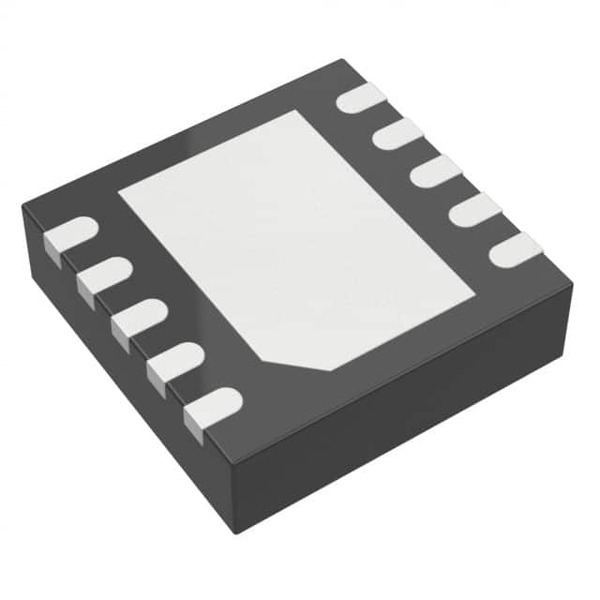
The device is suitable for surface mount applications and comes in a compact 10-DFN (3x3) package. Its adjustable output and robust protection features make it a reliable choice for various power management applications where precise voltage regulation is required. The regulator also includes enable and power good control features, facilitating system monitoring and control.
Key electrical characteristics include a maximum input voltage of 5.5V and a voltage dropout of 0.25V at 1.5A. The operating temperature range is from -40°C to 125°C, ensuring performance in demanding environments. The LTC302IDD#PBF is supplied in Tape & Reel packaging for automated assembly processes.
The output voltage is adjustable from 0.4V to 2.6V.
The device is offered in a 10-WFDFN exposed pad package (10-DFN 3x3mm) for surface mount.
The operating temperature range is -40°C to 125°C.
The output current rating is 1.5A.
The dropout voltage is 0.25V at 1.5A output.
It includes Enable and Power Good control features.
Protection features include over current, over temperature, reverse polarity, and short circuit.