

| Distributor | Stock | Pricing | MOQ | PKG | Lead Time | Date Code | On Order Quantity | On Order Delivery | |
|---|---|---|---|---|---|---|---|---|---|
|
24 pcs
|
24 pcs | On Request | 1 | On Request | On Request | On Request | On Request | On Request |
| Category | |
| Manufacturer Name | |
| Current | |
| Frequency | |
| Function | |
| Height | |
| Mounting Type | |
| Number of Outputs | |
| Operating Temperature | |
| Output Configuration | |
| Output Type | |
| Quiescent Current | |
| Supplier Device Package | |
| Synchronous Rectifier | |
| Tape & Reel | |
| Topology | |
| Voltage |
The LT8335EDDB#TRMPBF is a current mode DC-DC converter from Analog Devices, designed for generating positive or negative output voltages. It can be configured as a boost, SEPIC, or inverting converter, consuming as little as 6µA of quiescent current in Burst Mode operation, which maintains high efficiency at low output currents.
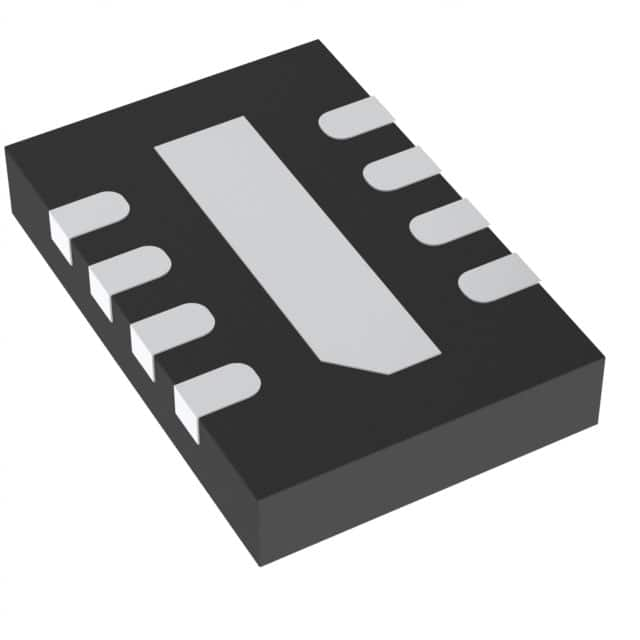
Key electrical specifications include a 3V to 25V input voltage range, a 2A switch current rating, and a fixed 2MHz switching frequency. The output voltage is adjustable. The device is housed in a compact 8-DFN (3x2mm) package with a very thin profile (0.75mm), making it suitable for space-constrained applications.
This converter is well-suited for applications requiring low quiescent current and high efficiency, such as portable electronics, industrial and automotive systems, and medical diagnostic equipment. Its integrated compensation and soft-start functions aid in controlling inductor current during startup.
| Qty | Low | High |
|---|---|---|
| 1+ | $1.08 | $1.08 |
Estimated market price range - modelled values for guidance only, not live distributor offers.
The operating junction temperature range is -40°C to 125°C.
The package is 8-DFN (3x2), a surface mount package with 8 terminals and a very thin profile.
The switching frequency is 2MHz.
The input voltage range is 3V to 25V.
The switch current is 2A.
Yes, the output is adjustable and can be configured as positive or negative.
It supports Boost and SEPIC topologies.