

| Distributor | Stock | Pricing | MOQ | PKG | Lead Time | Date Code | On Order Quantity | On Order Delivery | |
|---|---|---|---|---|---|---|---|---|---|
|
3,963 pcs
|
3963 pcs | On Request | 1 | On Request | On Request | 24+ | On Request | On Request |
| Category | |
| Manufacturer Name | |
| AEC Qualified | |
| Automotive Grade | |
| Halogen Free | |
| Industrial Grade | |
| Medical Grade | |
| Military Grade | |
| SVHC Present | |
| Tape & Reel |
The LT3042EDD#TRPBF is a high-performance linear voltage regulator manufactured by Analog Devices, Inc. This component is designed for positive adjustable output voltage applications, capable of delivering up to 200mA of current. It accepts a maximum input voltage of 20V and provides an adjustable output voltage ranging from 0V up to 15V.
Key electrical characteristics include a low voltage dropout of 0.35V at 200mA typical, and a wide Power Supply Rejection Ratio (PSRR) range of 117dB to 56dB across 120Hz to 10MHz. The device operates within a temperature range of -40°C to 125°C.
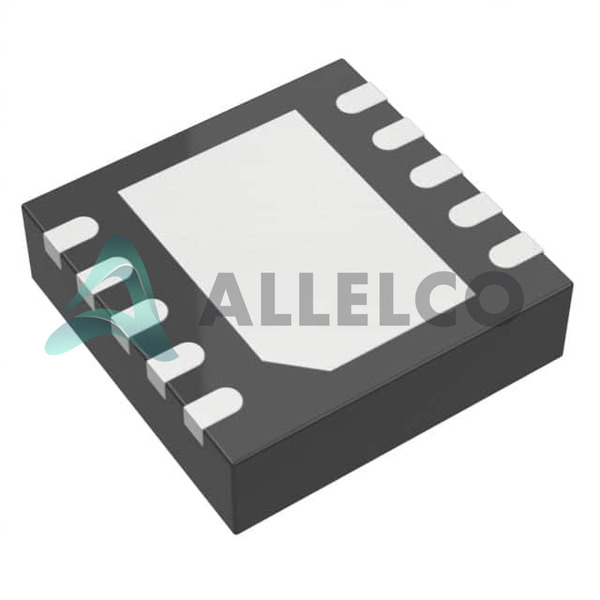
Packaged in a 10-WFDFN Exposed Pad, the LT3042EDD#TRPBF is designed for surface mounting. It features control functions such as current limit, enable, and power good, along with protection features including over-temperature and reverse polarity protection.
This regulator is suitable for various power management applications requiring stable and clean voltage regulation.
The maximum output current for the LT3042EDD#TRPBF is 200mA.
The maximum input voltage for the LT3042EDD#TRPBF is 20V.
The LT3042EDD#TRPBF operates from -40°C to 125°C.
The LT3042EDD#TRPBF is in a 10-WFDFN Exposed Pad package.
When selecting capacitors for the LT3042EDD#TRPBF, it is essential to focus on both input and output capacitors.
The LT3042EDD#TRPBF is designed to operate in a wide temperature range, typically from -40°C to +125°C. However, thermal performance can be influenced by factors such as PCB layout, ambient temperature, and current load. It is crucial to properly manage the thermal dissipation by using adequate heat sinks or ensuring sufficient airflow in the system design. A good PCB design with optimal trace width and thermal vias will also help maintain stable operation.