

| Distributor | Stock | Pricing | MOQ | PKG | Lead Time | Date Code | On Order Quantity | On Order Delivery | |
|---|---|---|---|---|---|---|---|---|---|
|
25 pcs
|
25 pcs | On Request | 1 | On Request | On Request | On Request | On Request | On Request |
| Category | |
| Manufacturer Name | |
| Current | |
| Frequency | |
| Function | |
| Mounting Type | |
| Number of Outputs | |
| Operating Temperature | |
| Output Configuration | |
| Output Type | |
| Supplier Device Package | |
| Supplier Package | |
| Synchronous Rectifier | |
| Topology | |
| Voltage |
The LT1506CR-3.3#TRPBF is a monolithic buck mode switching regulator designed for lower input voltage applications. It features a constant 500kHz switching frequency and can operate with an input voltage as low as 4V, up to 15V. The integrated switch handles up to 4.5A of current.
This regulator is optimized for efficiency and stability, utilizing current mode topology for fast transient response. It is suitable for applications requiring a fixed 3.3V output. The device includes cycle-by-cycle current limiting and thermal shutdown for protection.
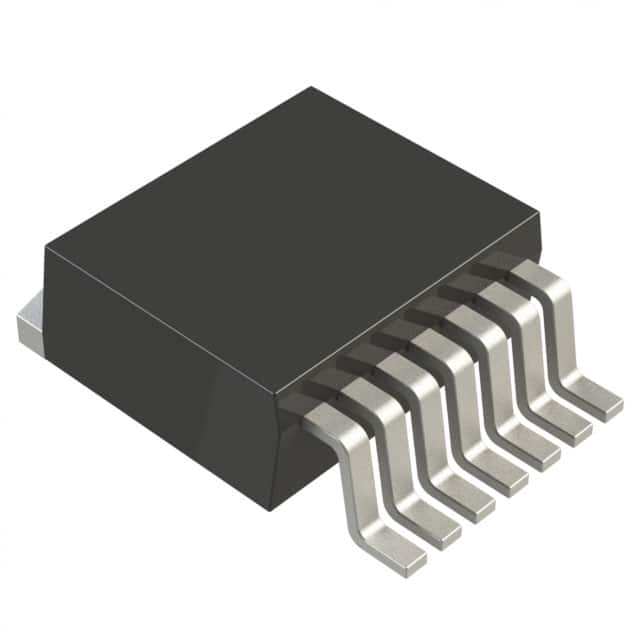
The LT1506CR-3.3#TRPBF is available in a 7-pin D2PAK (TO-263-8) surface mount package, making it suitable for space-constrained designs. Its high switching frequency allows for a reduction in the size of external components like inductors and capacitors.
Key features include a wide input voltage range, high output current capability, and a fixed output voltage. The device is designed for use in portable computers, battery-powered systems, and distributed power applications.
| Qty | Low | High |
|---|---|---|
| 1+ | $1.08 | $1.08 |
Estimated market price range - modelled values for guidance only, not live distributor offers.
The output voltage is fixed at 3.3V.
The maximum output current is 4.5A.
The input voltage range is 4V to 15V.
The switching frequency is 500kHz.
The operating junction temperature range is 0°C to 125°C.
It comes in a surface-mount TO-263-8 (D²Pak with 7 leads plus tab) package, also known as 7-DDPAK.
No, it uses a non-synchronous rectifier.