

| Distributor | Stock | Pricing | MOQ | PKG | Lead Time | Date Code | On Order Quantity | On Order Delivery | |
|---|---|---|---|---|---|---|---|---|---|
|
16,642 pcs
|
16642 pcs | On Request | 1 | On Request | On Request | On Request | On Request | On Request | |
|
13,608 pcs
|
13608 pcs | On Request | 1 | On Request | On Request | On Request | On Request | On Request |
| Category | |
| Manufacturer Name | |
| Connectivity | |
| Core Processor | |
| Core Size | |
| Data Converters | |
| EEPROM Size | |
| Frequency | |
| Mounting Type | |
| Number of I | |
| Operating Temperature | |
| Oscillator Type | |
| Peripherals | |
| Program Memory Size | |
| Program Memory Type | |
| RAM Size | |
| Speed | |
| Supplier Device Package | |
| Voltage |
The LPC54616J256ET180E from NXP Semiconductors is a powerful 32-bit microcontroller based on the ARM Cortex-M4 core, designed for embedded applications. It operates at a frequency of up to 180 MHz and includes a Floating Point Unit (FPU) and Memory Protection Unit (MPU).
This microcontroller offers 256KB of FLASH program memory and 136KB of SRAM, along with 16KB of EEPROM. It supports a wide range of peripherals including DMA, I²S, PWM, and WDT, and offers connectivity options such as CANbus, Ethernet, I²C, SPI, UART/USART, and USB.
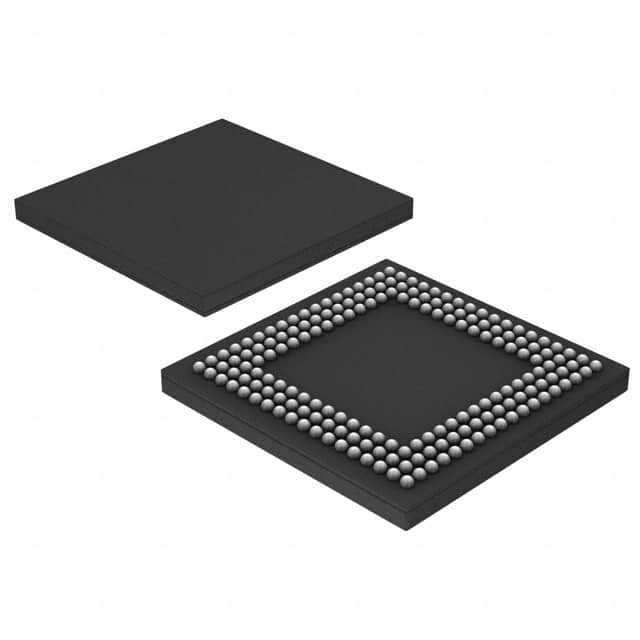
The LPC54616J256ET180E is supplied in a 180-TFBGA package and supports surface mount installation. It operates within a voltage range of 1.71V to 3.6V and has an operating temperature range of -40°C to 105°C (TA). The device includes a 12-bit Analog-to-Digital Converter (ADC).
Key features include its 32-bit single-core architecture, internal oscillator, and a comprehensive set of peripherals for diverse embedded system designs.
The core processor is ARM Cortex-M4.
This microcontroller operates at a frequency of up to 180 MHz.
It has 256KB of FLASH program memory.
The SRAM size is 136K x 8.
The package is 180-TFBGA and it is a surface mount device.
The operating temperature range is -40°C to 105°C (TA).
Connectivity options include CANbus, Ethernet, I²C, SPI, UART/USART, and USB.