

| Distributor | Stock | Pricing | MOQ | PKG | Lead Time | Date Code | On Order Quantity | On Order Delivery | |
|---|---|---|---|---|---|---|---|---|---|
|
457 pcs
|
457 pcs | On Request | 1 | On Request | On Request | On Request | On Request | On Request |
| Category | |
| Manufacturer Name | |
| Control Features | |
| Current | |
| Mounting Type | |
| Number of Regulators | |
| Operating Temperature | |
| Output Configuration | |
| Output Current | |
| Output Type | |
| PSRR | |
| Protection Features | |
| Supplier Device Package | |
| Voltage | |
| Voltage Dropout (Max) |
The Texas Instruments LP2980IM5-2.5 is a micropower, ultra-low-dropout linear voltage regulator designed for battery-powered applications. It provides a stable 2.5V fixed output voltage and can deliver up to 50mA of current.
The regulator features a wide input voltage range from 2.1V to 16V, making it versatile for various power sources. Its ultra-low dropout voltage is typically 120mV at a 50mA load, minimizing power loss. Protection features include overcurrent, overtemperature, and short-circuit protection, enhancing reliability.
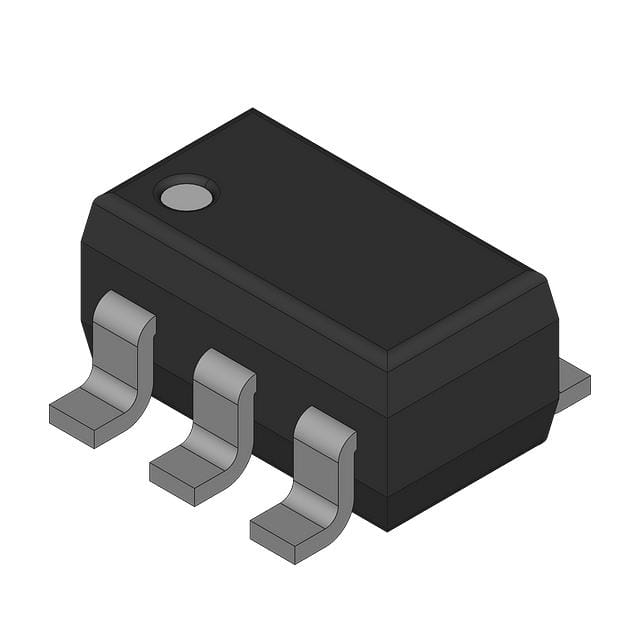
Designed for minimal component count, it requires only a 1µF external capacitor on the output. The device operates over a junction temperature range of -40°C to 125°C and is housed in a compact SOT-23-5 surface-mount package.
Key electrical characteristics include a quiescent current of less than 1µA when in shutdown mode and a PSRR of 63dB at 1kHz. The LP2980-N series offers various fixed output voltage versions.
| Qty | Low | High |
|---|---|---|
| 1+ | $0.28 | $0.28 |
Estimated market price range - modelled values for guidance only, not live distributor offers.
The input voltage range is 2.1V to 16V.
The output voltage is fixed at 2.5V.
It is available in SOT-23-5, SC-74A, and SOT-753 surface-mount packages.
The operating temperature range is -40°C to 125°C.
The typical dropout voltage is 120mV at 50mA load and 7mV at 1mA load.
The ensured output current is 50mA, with a typical peak current capability of 150mA.
It includes overcurrent, overtemperature, and short-circuit protection.