

| Distributor | Stock | Pricing | MOQ | PKG | Lead Time | Date Code | On Order Quantity | On Order Delivery | |
|---|---|---|---|---|---|---|---|---|---|
|
6,696 pcs
|
6696 pcs | On Request | 1 | On Request | On Request | On Request | On Request | On Request | |
|
6,626 pcs
|
6626 pcs | On Request | 1 | On Request | On Request | 24+ | On Request | On Request |
| Category | |
| Manufacturer Name | |
| Current Consumption | |
| Differential | |
| Divider | |
| Frequency | |
| Input | |
| Mounting Type | |
| Number of Circuits | |
| Operating Temperature | |
| Output | |
| PLL | |
| Ratio | |
| Supplier Device Package | |
| Tape & Reel | |
| Type | |
| Voltage |
The Texas Instruments LMX2581SQ/NOPB is a high-performance, low-noise, wideband frequency synthesizer designed for RF applications. It integrates a delta-sigma fractional N PLL, a core VCO, a programmable output divider, and two differential output buffers.
This device offers a wide output frequency range from 50 to 3760 MHz, with an input clock frequency up to 900 MHz. Key electrical specifications include a normalized PLL phase noise of -229 dBc/Hz and a typical current consumption of 178 mA. It operates from a single supply voltage of 3.15 V to 3.45 V and supports logic levels down to 1.6 V.
The LMX2581SQ/NOPB features a programmable output power up to +12 dBm at 2700 MHz. It supports both fractional and integer modes, offering flexibility in frequency planning. The device operates within a temperature range of -40°C to 85°C.
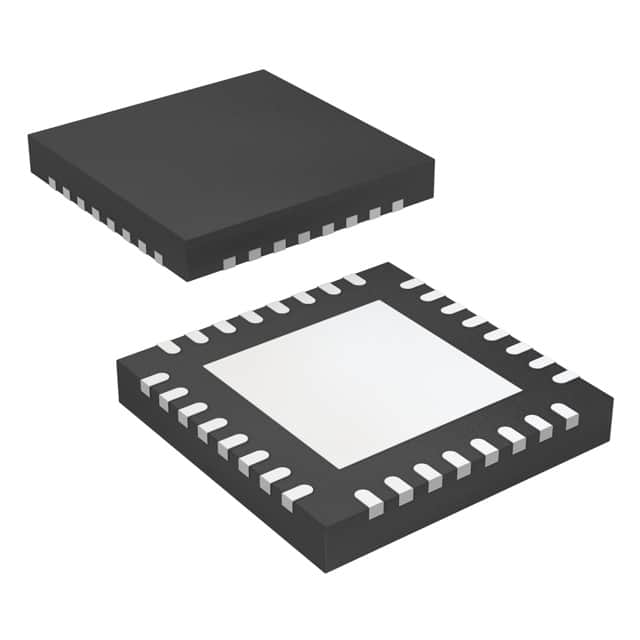
Packaged in a 32-WQFN (5x5 mm) surface-mount package, the LMX2581SQ/NOPB is suitable for various RF designs requiring precise frequency generation.
| Qty | Low | High |
|---|---|---|
| 1+ | $8.43 | $8.43 |
Estimated market price range - modelled values for guidance only, not live distributor offers.
The operating voltage range is 3.15 V to 3.45 V.
The package is a 32-WQFN (5x5 mm) with an exposed pad.
The operating temperature range is -40°C to 85°C.
The output frequency range is from 50 to 3760 MHz.
The normalized PLL phase noise is -229 dBc/Hz.
The typical current consumption is 178 mA.