

| Distributor | Stock | Pricing | MOQ | PKG | Lead Time | Date Code | On Order Quantity | On Order Delivery | |
|---|---|---|---|---|---|---|---|---|---|
|
3,539 pcs
|
3539 pcs | On Request | 1 | On Request | On Request | On Request | On Request | On Request |
| Category | |
| Manufacturer Name | |
| AEC Qualified | |
| Automotive Grade | |
| Current | |
| Duty Cycle (Max) | |
| Frequency | |
| Function | |
| Mounting Type | |
| Number of Outputs | |
| Operating Temperature | |
| Output Configuration | |
| Output Type | |
| Protection Features | |
| Supplier Device Package | |
| Synchronous Rectifier | |
| Topology | |
| Voltage |
The Texas Instruments LMR36015FSCQRNXRQ1 is an automotive-qualified synchronous step-down DC DC switching regulator. It is designed for applications requiring efficient power conversion with a wide input voltage range from 4.2V to 60V, and can deliver up to 1.5A of output current.
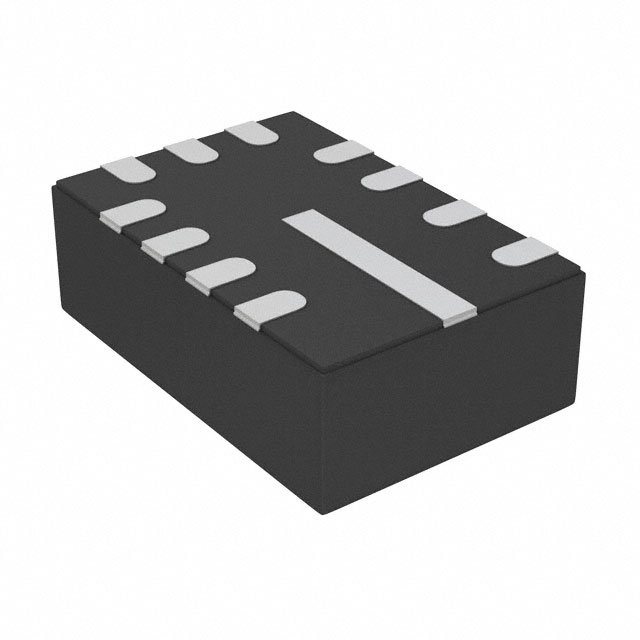
This device operates at a switching frequency of 2.1MHz, contributing to a small solution size. It is housed in a compact 12-VQFN-HR package measuring 3mm x 2mm, featuring wettable flanks for improved solder joint inspection. The operating temperature range is -40°C to 150°C (TJ), making it suitable for demanding environments.
Key features include adjustable output voltage, synchronous rectification for high efficiency, and integrated protection features such as thermal shutdown, input undervoltage lockout, and cycle-by-cycle current limit. It also offers functional safety capabilities, with documentation available to aid in functional safety system design. The regulator is pin-compatible with other LMR360xx-Q1 and LMR336xx-Q1 devices, facilitating scalable power supply designs.
| Qty | Low | High |
|---|---|---|
| 1+ | $1.38 | $1.38 |
Estimated market price range - modelled values for guidance only, not live distributor offers.
4.2V to 60V
12-VFQFN (12-VQFN-HR 3x2 mm)
-40°C to 150°C junction temperature
Up to 1.5A
2.1 MHz
Yes, it features synchronous rectification.
Thermal shutdown, input undervoltage lockout, cycle-by-cycle current limit, and hiccup short-circuit protection.