

| Distributor | Stock | Pricing | MOQ | PKG | Lead Time | Date Code | On Order Quantity | On Order Delivery | |
|---|---|---|---|---|---|---|---|---|---|
|
1,000 pcs
|
1000 pcs | On Request | 1 | On Request | On Request | 21+ | On Request | On Request | |
|
630 pcs
|
630 pcs | On Request | 1 | On Request | On Request | 21+ | On Request | On Request |
| Category | |
| Manufacturer Name | |
| Differential | |
| Divider | |
| Features | |
| Frequency | |
| Input | |
| Input Type | |
| Mounting Type | |
| Number of Circuits | |
| Operating Temperature | |
| Output | |
| Output Type | |
| PLL | |
| Ratio | |
| Supplier Device Package | |
| Supplier Package | |
| Type | |
| Voltage |
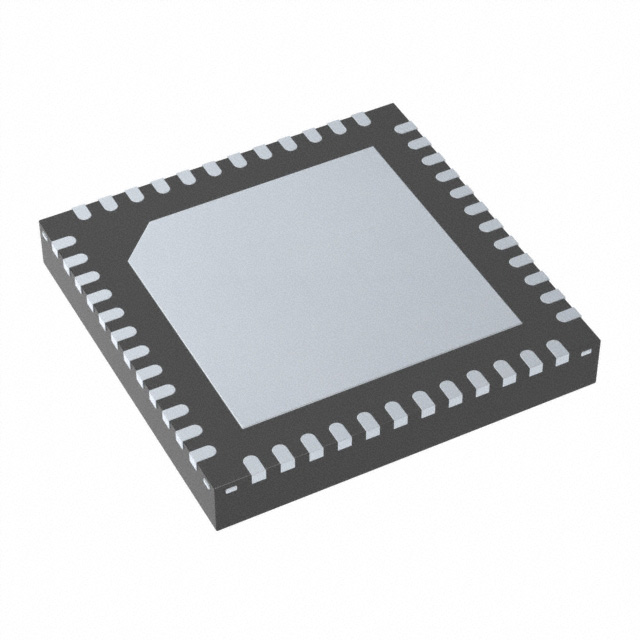
The LMK05318BRGZT from Texas Instruments is a high-performance network synchronizer clock designed for communications infrastructure and industrial applications. It provides jitter cleaning, clock generation, and advanced clock monitoring capabilities.
Key electrical specifications include an 800 MHz maximum frequency, with outputs supporting formats like HCSL, LVCMOS, LVDS, and LVPECL. The device boasts ultra-low jitter performance, with typical RMS jitter as low as 50 fs at 312.5 MHz. It operates from a 3.3V core supply and offers output supplies of 1.8V, 2.5V, or 3.3V.
This clock generator features one high-performance Digital Phase-Locked Loop (DPLL) and two Analog Phase-Locked Loops (APLLs). It supports flexible configuration options including I2C and SPI interfaces. The device is housed in a 48-VQFN (7x7 mm) package and operates within an industrial temperature range of -40°C to +85°C.
Applications include SyncE, SONET/SDH, IEEE 1588 PTP slave clock, and reference clock generation for high-speed serial links like 56G/112G PAM-4 PHYs, ASICs, FPGAs, SoCs, and processors.
| Qty | Low | High |
|---|---|---|
| 1+ | $12.59 | $12.59 |
Estimated market price range - modelled values for guidance only, not live distributor offers.
The maximum output frequency is 1250 MHz.
The typical RMS jitter is 50 fs at 312.5 MHz for APLL1 and 125 fs at 155.52 MHz for APLL2.
It requires a 3.3V core supply and supports 1.8V, 2.5V, or 3.3V output supplies.
The operating temperature range is -40°C to +85°C.
It is available in a 48-VFQFN Exposed Pad package.
It supports HCSL, LVCMOS, LVDS, and LVPECL output formats.
The device supports I2C and SPI interfaces.