

| Distributor | Stock | Pricing | MOQ | PKG | Lead Time | Date Code | On Order Quantity | On Order Delivery | |
|---|---|---|---|---|---|---|---|---|---|
|
2,080 pcs
|
2080 pcs | On Request | 1 | On Request | On Request | 1820+5 | On Request | On Request | |
|
512 pcs
|
512 pcs | On Request | 1 | On Request | On Request | N/A | On Request | On Request |
| Category | |
| Manufacturer Name | |
| Differential | |
| Frequency | |
| Input | |
| Mounting Type | |
| Number of Circuits | |
| Number of Outputs | |
| Operating Temperature | |
| Output | |
| Output Type | |
| Ratio | |
| Supplier Device Package | |
| Tape & Reel | |
| Type | |
| Voltage |
The Texas Instruments LMK00101SQX/NOPB is a high-performance, low-noise LVCMOS fanout buffer designed to distribute 10 ultra-low jitter clocks. It accepts universal inputs including differential, single-ended, and crystal signals, supporting frequencies up to 200 MHz.
This buffer offers flexibility with a core supply voltage of 2.5V or 3.3V and adjustable output supply voltages of 1.5V, 1.8V, 2.5V, and 3.3V for each bank. Key electrical specifications include an additive RMS jitter of 30 fs (typ) and an output skew of 25 ps.
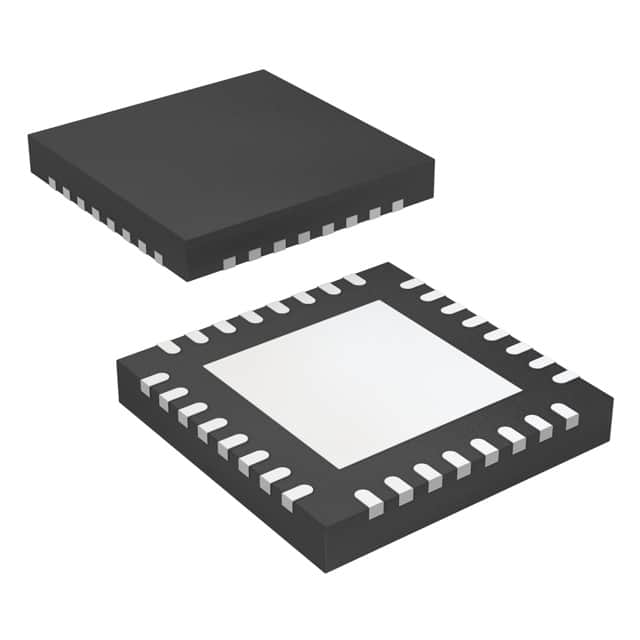
The LMK00101SQX/NOPB operates within a temperature range of -40°C to 85°C. It is housed in a 32-WQFN (5x5 mm) surface-mount package, suitable for various networking, telecom, server, and test equipment applications.
Configuration can be easily managed through pin programming, and the device supports synchronous output enable for glitch-free operation. Its ultra-low skew, low jitter, and high PSRR make it ideal for demanding clock distribution tasks.
| Qty | Low | High |
|---|---|---|
| 1+ | $2.67 | $2.67 |
Estimated market price range - modelled values for guidance only, not live distributor offers.
The operating temperature range is -40°C to 85°C.
It is available in a 32-WQFN (5x5) package.
The RoHS status is RoHS3 Compliant.
The MSL is 1 Unlimited.
The device supports outputs up to 200 MHz.
It has 10 outputs.
It supports universal inputs including LVPECL, LVDS, HCSL, SSTL, LVCMOS/LVTTL, and Crystal.