

| Distributor | Stock | Pricing | MOQ | PKG | Lead Time | Date Code | On Order Quantity | On Order Delivery | |
|---|---|---|---|---|---|---|---|---|---|
|
1,322 pcs
|
1322 pcs | On Request | 1 | On Request | On Request | 19+ | On Request | On Request |
| Category | |
| Manufacturer Name |
The LF398N/NOPB from Texas Instruments is a monolithic sample and hold circuit designed for high DC accuracy and fast signal acquisition. Utilizing BI-FET technology, it achieves ultra-high DC accuracy with acquisition times as low as 6 µs to 0.01%. The device operates from ±5-V to ±18-V supplies and is compatible with TTL, PMOS, and CMOS logic inputs.
Key features include a low input offset of 7 mV typical, a gain accuracy of 0.002% typical when operating as a unity-gain follower, and low output noise in hold mode. The input characteristics remain stable during the hold mode, and it boasts a high supply rejection ratio in both sample and hold modes. Its wide bandwidth allows integration within the feedback loop of 1-MHz operational amplifiers without stability issues. The input impedance is 10¹⁰ Ω, enabling the use of high-source impedances without compromising accuracy.
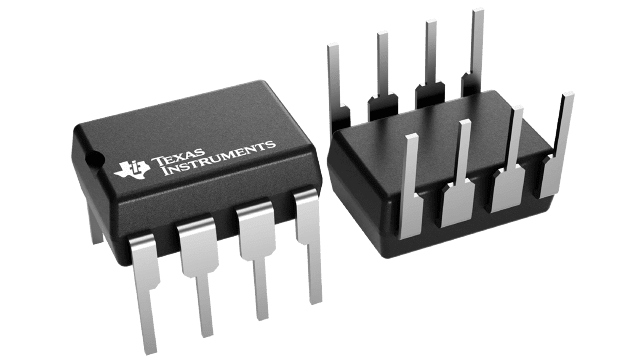
The LF398N/NOPB is available in SOIC (14 leads) and PDIP (8 leads) packages. The P-channel junction FETs combined with bipolar devices in the output amplifier provide droop rates as low as 5 mV/min with a 1-µF hold capacitor. This design ensures no feedthrough from input to output in hold mode, even with input signals at supply voltage levels. The operating temperature range is 0°C to 70°C.
| Qty | Low | High |
|---|---|---|
| 1+ | $1.00 | $1.00 |
Estimated market price range - modelled values for guidance only, not live distributor offers.
The acquisition time is as low as 6 µs to 0.01% and a maximum of 10 µs.
It operates from ±5-V to ±18-V supplies.
The operating temperature range is 0°C to 70°C.
It is available in SOIC and PDIP packages.
The typical gain accuracy is 0.002% when operating as a unity-gain follower.
The typical hold step is 0.5 mV at Ch = 0.01 µF.