

| Distributor | Stock | Pricing | MOQ | PKG | Lead Time | Date Code | On Order Quantity | On Order Delivery | |
|---|---|---|---|---|---|---|---|---|---|
|
2,581 pcs
|
2581 pcs | On Request | 1 | On Request | On Request | On Request | On Request | On Request | |
|
643 pcs
|
643 pcs | On Request | 1 | On Request | On Request | 20+ | On Request | On Request |
| Category | |
| Manufacturer Name | |
| Lead Spacing | |
| Mounting Type | |
| Number of I | |
| Number of LABs | |
| Number of Logic Elements | |
| Operating Temperature | |
| Supplier Device Package | |
| Total RAM Bits | |
| Voltage |
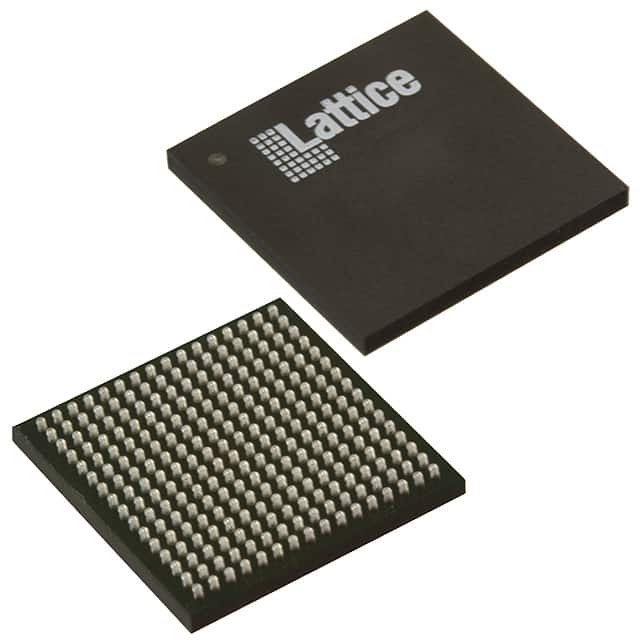
The Lattice Semiconductor LCMXO2-2000HC-4BG256C is a Field Programmable Gate Array (FPGA) from the MachXO2 family. It features a flexible logic architecture with 2112 logic elements and 264 LABs, supporting up to 206 I/O pins. The device offers 75776 total RAM bits for embedded and distributed memory applications.
This FPGA operates within a voltage range of 2.375V to 3.465V and has an operating temperature range of 0°C to 85°C (TJ). It includes on-chip user flash memory with up to 256 kbits capacity and 100,000 write cycles. The device also features an on-chip oscillator with 5.5% accuracy and a PLL input frequency range of 7 MHz to 400 MHz.
The LCMXO2-2000HC-4BG256C is designed for ultra-low power consumption, with standby power as low as 22 µW. It utilizes an advanced 65 nm low power process. The device supports various I/O standards including LVCMOS, LVTTL, LVDS, and HSTL.
Packaged in a 256-LFBGA (256-CABGA 14x14) format, this FPGA is designed for surface mounting. Its non-volatile, infinitely reconfigurable nature allows for instant-on functionality, powering up in microseconds. It is programmable through JTAG, SPI, or I2C interfaces.
The LCMXO2-2000HC-4BG256C has 2112 logic elements.
This FPGA has 206 I/O pins.
The operating voltage range is 2.375V to 3.465V.
It is supplied in a 256-LFBGA package, which is a surface mount type.
The operating temperature range is 0°C to 85°C (TJ).
The device has up to 256 kbits of user flash memory.
The standby power consumption is as low as 22 µW.