

| Distributor | Stock | Pricing | MOQ | PKG | Lead Time | Date Code | On Order Quantity | On Order Delivery | |
|---|---|---|---|---|---|---|---|---|---|
|
2,580 pcs
|
2580 pcs | On Request | 1 | On Request | On Request | On Request | On Request | On Request | |
|
1,000 pcs
|
1000 pcs | On Request | 1 | On Request | On Request | On Request | On Request | On Request |
| Category | |
| Manufacturer Name | |
| Battery Chemistry | |
| Fault Protection | |
| Function | |
| Interface | |
| Mounting Type | |
| Number of Cells | |
| Supplier Device Package | |
| Supplier Package |
The STMicroelectronics L9963-TR is a high-reliability Li-ion battery monitoring and protection chip suitable for automotive applications and energy storage systems. It can monitor up to 14 stacked battery cells, meeting the requirements of 48 V and higher voltage systems.
Key features include a 16-bit voltage measurement with a maximum error of ±2 mV, a Coulomb counter supporting pack overcurrent detection, and 200 mA passive internal balancing current. The device offers 2.66 Mbps isolated serial communication with low latency and supports up to 7 NTCs for sensing. It is AEC-Q100 qualified and fully ISO26262 compliant, ASIL-D systems ready.
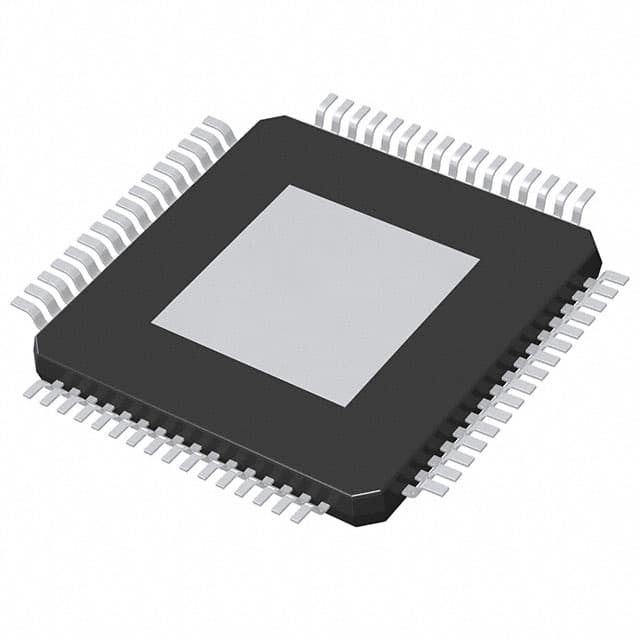
The L9963-TR is available in a 64-TQFP Exposed Pad package suitable for surface mounting. Its robust hot-plug performance and intelligent diagnostic routines enhance safety and reliability in demanding applications like 48 V battery packs, backup energy storage, and electric vehicles.
| Qty | Low | High |
|---|---|---|
| 1+ | $0.75 | $0.75 |
Estimated market price range - modelled values for guidance only, not live distributor offers.
The L9963-TR is RoHS3 Compliant.
The MSL for the L9963-TR is 1 Unlimited.
The L9963-TR is REACH Unaffected.
The L9963-TR can measure 4 to 14 cells in series.
The L9963-TR has a 16-bit voltage measurement with a maximum error of ±2 mV in the [1.7 – 4.7] V range.
The L9963-TR features 2.66 Mbps isolated serial communication.
Yes, the L9963-TR provides 200 mA passive internal balancing current for each cell.