

| Distributor | Stock | Pricing | MOQ | PKG | Lead Time | Date Code | On Order Quantity | On Order Delivery | |
|---|---|---|---|---|---|---|---|---|---|
|
2,500 pcs
|
2500 pcs | On Request | 1 | On Request | On Request | On Request | On Request | On Request |
| Category | |
| Manufacturer Name | |
| Current | |
| Frequency | |
| Function | |
| Mounting Type | |
| Number of Outputs | |
| Operating Temperature | |
| Output Configuration | |
| Output Type | |
| Output Voltage | |
| SVHC Present | |
| Supplier Device Package | |
| Synchronous Rectifier | |
| Topology | |
| Voltage |
The Renesas ISL9112IRTNZ-T7A is a high-performance DC DC switching regulator belonging to the Buck-Boost topology. This component is designed to provide a stable 3.3V fixed output voltage with a maximum output current of 1.2A, operating from an input voltage of 1.8V. Its function as a step-up/step-down regulator makes it versatile for various power management needs.
Featuring a switching frequency of 2.5MHz, the ISL9112IRTNZ-T7A is optimized for efficiency and compact design. It includes a synchronous rectifier for improved performance. The device operates within a temperature range of -40°C to 85°C (TA), ensuring reliability in diverse environmental conditions. The single positive output configuration is suitable for numerous electronic circuits.
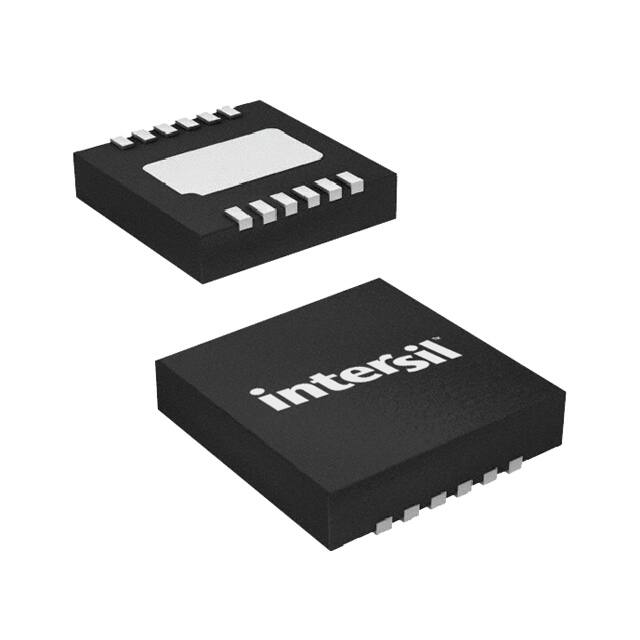
This regulator is supplied in a 12-WFDFN Exposed Pad package, requiring surface mount installation. Its robust design and specifications make it suitable for applications where efficient and reliable power conversion is critical. The component is RoHS3 compliant, indicating adherence to environmental standards.
| Qty | Low | High |
|---|---|---|
| 1+ | $0.16 | $0.16 |
Estimated market price range - modelled values for guidance only, not live distributor offers.
The output voltage is fixed at 3.3V.
The output current is 1.2A.
The switching frequency is 2.5MHz.
The operating temperature range is -40°C to 85°C.
It comes in a 12-TDFN (3x3mm) surface mount package with an exposed pad.
It uses a buck-boost topology.
Yes, it features synchronous rectification.