

| Distributor | Stock | Pricing | MOQ | PKG | Lead Time | Date Code | On Order Quantity | On Order Delivery | |
|---|---|---|---|---|---|---|---|---|---|
|
8,745 pcs
|
8745 pcs | On Request | 1 | On Request | On Request | On Request | On Request | On Request |
| Category | |
| Manufacturer Name | |
| Clock Sync | |
| Control Features | |
| Duty Cycle (Max) | |
| Failure Rate | |
| Frequency | |
| Function | |
| Mounting Type | |
| Number of Outputs | |
| Operating Temperature | |
| Output Configuration | |
| Output Current | |
| Output Phases | |
| Output Type | |
| Product Type | |
| Supplier Device Package | |
| Synchronous Rectifier | |
| Topology | |
| Type | |
| Voltage |
The ISL6741IBZ is a switching controller manufactured by Renesas, designed for efficient power management. This component features 2 outputs and supports a maximum duty cycle of 83%, operating at frequencies up to 1MHz. It is suitable for step-up/step-down functions and employs a topology that includes full-bridge, half-bridge, and push-pull configurations.
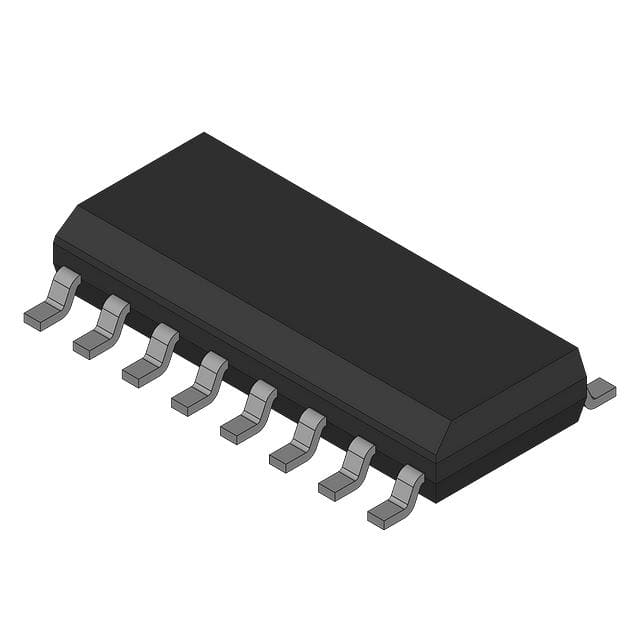
The device operates within a voltage range of 9V to 16V and has an output current capability of 500 mA. Its operating temperature range is from -40°C to 105°C. The ISL6741IBZ is housed in a 16-SOIC package, designed for surface mount applications.
Key electrical characteristics include synchronous rectification and clock synchronization capabilities, along with control features such as enable, frequency control, and soft start. The component is classified under PMIC - Power Management ICs and falls under the category of DC DC Switching Controllers.
| Qty | Low | High |
|---|---|---|
| 1+ | $0.75 | $0.75 |
Estimated market price range - modelled values for guidance only, not live distributor offers.
The operating voltage range is 9V to 16V.
The ISL6741IBZ is available in a 16-pin narrow SOIC package (16-SOIC, 0.154" width, 3.90mm width).
The operating temperature range is -40°C to +105°C.
The maximum switching frequency is 1MHz.
The ISL6741IBZ has 2 transistor driver outputs.
It supports full-bridge, half-bridge, and push-pull topologies.