

| Distributor | Stock | Pricing | MOQ | PKG | Lead Time | Date Code | On Order Quantity | On Order Delivery | |
|---|---|---|---|---|---|---|---|---|---|
|
6 pcs
|
6 pcs | On Request | 1 | On Request | On Request | On Request | On Request | On Request |
| Category | |
| Manufacturer Name | |
| Coil Current | |
| Coil Insulation | |
| Coil Resistance | |
| Coil Type | |
| Coil Voltage | |
| Contact Form | |
| Contact Material | |
| Contact Rating (Current) | |
| Height | |
| Lead Style | |
| Length | |
| Mounting Type | |
| Must Operate Voltage | |
| Must Release Voltage | |
| Operate Time | |
| Operating Temperature | |
| Power Consumption | |
| Relay Type | |
| Release Time | |
| Seal Rating | |
| Switching Voltage | |
| Termination Style | |
| Width |
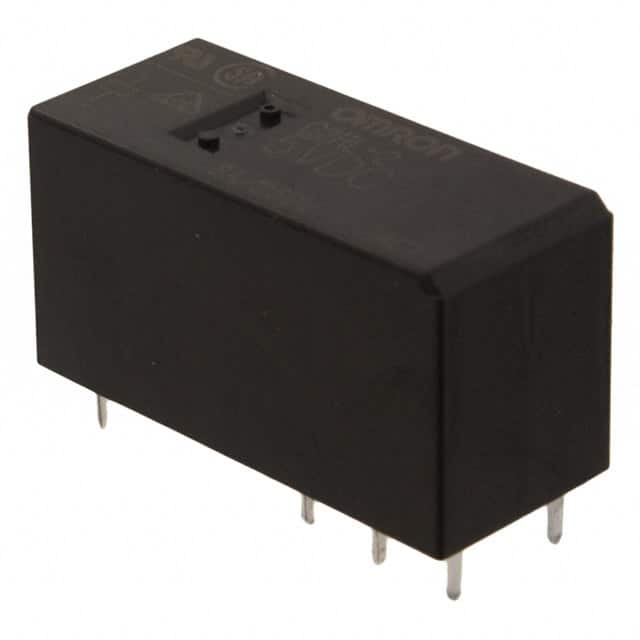
The Omron G2RL2DC24 is a general purpose relay designed for various applications. It features a DPDT (2 Form C) contact configuration, capable of handling a contact current rating of 8A. The relay operates with a 24VDC coil voltage and has a coil resistance of 1440 Ohms, drawing a typical coil current of 16.7 mA.
This relay is suitable for a wide range of operating temperatures, from -40°C to 85°C. It has an operate time of 15 ms and a release time of 5 ms. The switching voltage can reach up to 440VAC or 300VDC. The component is sealed for flux protection and utilizes a Class F coil insulation.
Designed for through-hole mounting, the G2RL2DC24 has a termination style of PC Pin. Its mechanical dimensions are 29 mm in length, 12.7 mm in width, and 15.7 mm in height. The relay is compliant with RoHS3 standards and has an MSL rating of 1 Unlimited.
| Qty | Low | High |
|---|---|---|
| 1+ | $2.00 | $2.00 |
Estimated market price range - modelled values for guidance only, not live distributor offers.
The coil voltage for the Omron G2RL2DC24 relay is 24VDC.
The contact current rating of the G2RL2DC24 relay is 8A.
The Omron G2RL2DC24 has a DPDT (2 Form C) contact form.
The operating temperature range for this relay is -40°C to 85°C.
The Omron G2RL2DC24 relay is mounted using the through-hole method.