

| Distributor | Stock | Pricing | MOQ | PKG | Lead Time | Date Code | On Order Quantity | On Order Delivery | |
|---|---|---|---|---|---|---|---|---|---|
|
11 pcs
|
11 pcs | On Request | 1 | On Request | On Request | N/A | On Request | On Request |
| Category | |
| Manufacturer Name | |
| Coil Current | |
| Coil Type | |
| Coil Voltage | |
| Contact Form | |
| Contact Material | |
| Contact Rating (Current) | |
| Mounting Type | |
| Must Operate Voltage | |
| Must Release Voltage | |
| Operate Time | |
| Operating Temperature | |
| Relay Type | |
| Release Time | |
| Seal Rating | |
| Switching Voltage | |
| Termination Style |
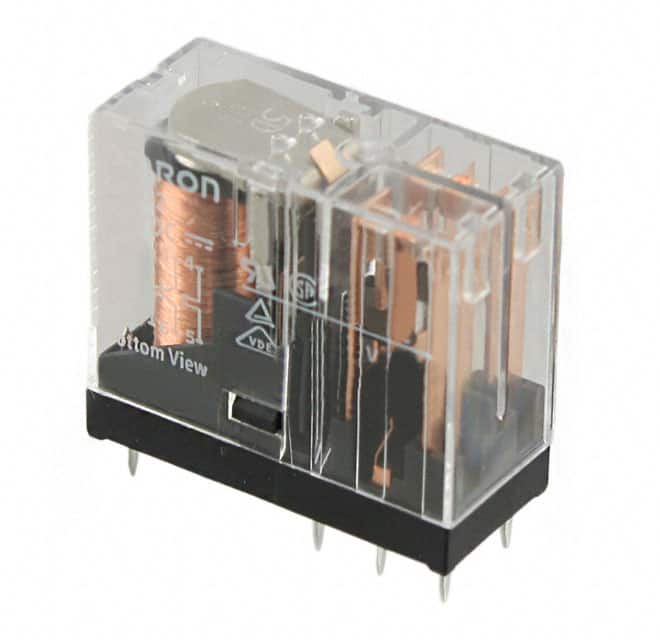
The Omron G2R-2-DC24 is a DPDT (Double Pole Double Throw) general purpose power relay with a 5A contact rating. It operates with a 24VDC coil voltage and features a non-latching coil type. The relay is designed for through-hole mounting with PC pin termination.
Key electrical specifications include a minimum operate voltage of 16.8 VDC and a maximum release voltage of 3.6 VDC. The operate time is 15 ms, and the release time is 5 ms. It can switch up to 380VAC or 125VDC. The contact material is Silver Alloy.
This relay is sealed for flux protection and operates within a temperature range of -40°C to 70°C. Its robust design includes a dielectric strength of 5,000V between coil and contacts and a surge resistance of 10,000V, making it suitable for various industrial applications.
| Qty | Low | High |
|---|---|---|
| 1+ | $2.00 | $2.00 |
Estimated market price range - modelled values for guidance only, not live distributor offers.
The coil voltage for the Omron G2R-2-DC24 relay is 24VDC.
The G2R-2-DC24 relay has a contact rating of 5A.
The G2R-2-DC24 relay has a DPDT (2 Form C) contact form.
The operating temperature range for this relay is -40°C to 70°C.
The G2R-2-DC24 relay is designed for through-hole mounting.
The mechanical lifespan can reach up to 10 million operations, while the electrical lifespan may vary from 100,000 to 1 million operations.
The G2R-2-DC24 BY relay is designed for PCB mounting. Ensure the relay is securely placed in the PCB slots and that the pin connections are properly aligned. Solder the pins to the PCB, making sure that the relay is not subjected to excessive heat or mechanical stress. It's also essential to avoid static electricity, as it can damage sensitive components.