

| Distributor | Stock | Pricing | MOQ | PKG | Lead Time | Date Code | On Order Quantity | On Order Delivery | |
|---|---|---|---|---|---|---|---|---|---|
|
7,386 pcs
|
7386 pcs | On Request | 1 | On Request | On Request | On Request | On Request | On Request | |
|
2 pcs
|
2 pcs | On Request | 1 | On Request | On Request | On Request | On Request | On Request |
| Category | |
| Manufacturer Name | |
| Mounting Type | |
| Number of I | |
| Number of LABs | |
| Number of Logic Elements | |
| Operating Temperature | |
| Supplier Device Package | |
| Total RAM Bits | |
| Voltage |
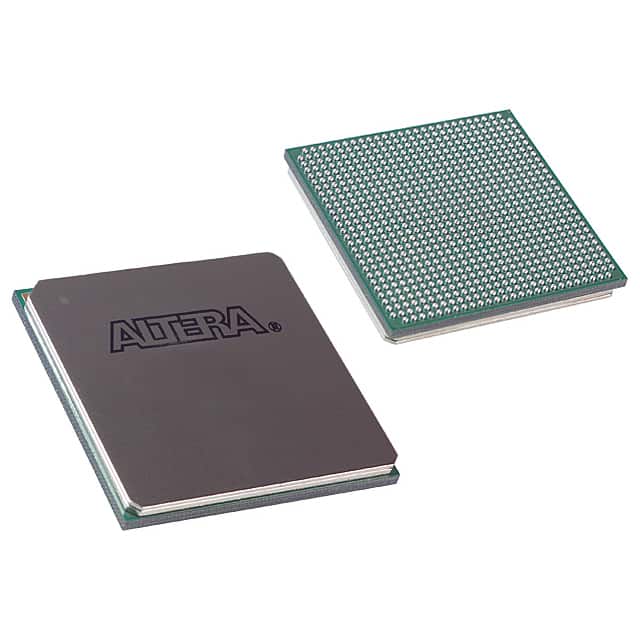
The Intel EP3C120F780I7 is a Field Programmable Gate Array (FPGA) belonging to the Cyclone III series. This device offers a substantial 119,088 logic elements and 7,443 logic array blocks (LABs), coupled with 3,981,312 total RAM bits.
Designed for high-volume, low-power, and cost-sensitive applications, the Cyclone III family utilizes TSMC's low-power process technology. The EP3C120F780I7 specifically provides 531 I/O pins and operates with a supply voltage between 1.15V and 1.25V. Its operating temperature range is -40°C to 100°C (TJ).
The component is housed in a 780-BGA package, with the supplier device package specified as 780-FBGA (29x29). It is designed for surface mount applications.
The Cyclone III LS variant offers enhanced security features, including AES encryption with a 256-bit volatile key, design separation capabilities, and the ability to disable the external JTAG port. These features protect intellectual property from tampering and reverse engineering.
The EP3C120F780I7 FPGA has 119,088 logic elements.
The EP3C120F780I7 FPGA has 531 I/O pins.
The EP3C120F780I7 FPGA operates within a supply voltage range of 1.15V to 1.25V.
The EP3C120F780I7 FPGA is supplied in a 780-BGA package, specifically a 780-FBGA (29x29) for surface mounting.
The EP3C120F780I7 FPGA can operate in temperatures ranging from -40°C to 100°C (TJ).
Common troubleshooting steps include checking the power supply for correct voltage and current, verifying configuration settings and bitstream loading, examining clock sources for stability and frequency, and inspecting for overheating.