

| Distributor | Stock | Pricing | MOQ | PKG | Lead Time | Date Code | On Order Quantity | On Order Delivery | |
|---|---|---|---|---|---|---|---|---|---|
|
35,451 pcs
|
35451 pcs | On Request | 1 | On Request | On Request | On Request | On Request | On Request | |
|
28,525 pcs
|
28525 pcs | On Request | 1 | On Request | On Request | On Request | On Request | On Request |
| Category | |
| Manufacturer Name | |
| Data Rate | |
| Lead Spacing | |
| Mounting Type | |
| Number of Drivers | |
| Operating Temperature | |
| Protocol | |
| Supplier Device Package | |
| Supplier Package | |
| Type | |
| Voltage |
The DS90LV047ATMTC/NOPB from Texas Instruments is a quad CMOS flow-through differential line driver designed for high-speed data transmission. It supports data rates exceeding 400 Mbps (200 MHz) utilizing Low Voltage Differential Signaling (LVDS) technology.
This driver accepts low voltage TTL/CMOS input levels and translates them to low voltage (350 mV) differential output signals. Key electrical specifications include a signaling rate of 400 Mbps, a typical differential skew of 300 ps, and a maximum propagation delay of 1.7 ns. It operates from a 3V to 3.6V power supply and exhibits low power dissipation, with a static power consumption of 13 mW typical.
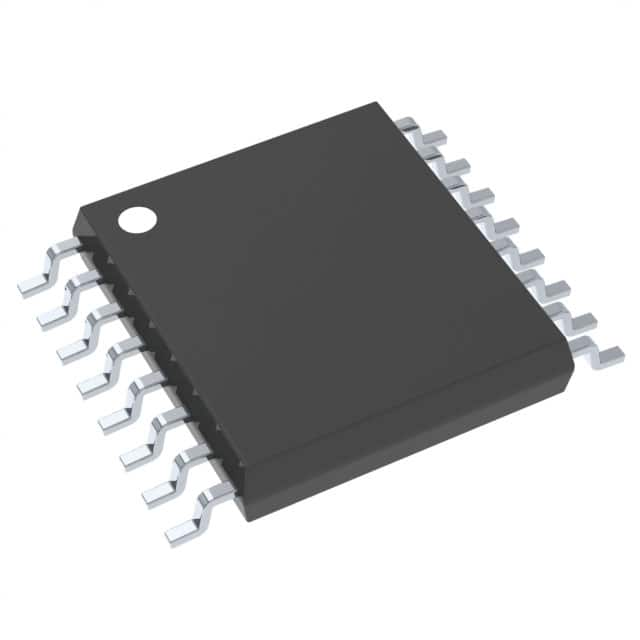
The device is designed for industrial applications, with an operating temperature range of -40°C to 85°C. It is available in a 16-TSSOP surface mount package. The flow-through pinout simplifies PCB layout, and the outputs are high impedance on power down. It conforms to the TIA/EIA-644 LVDS standard and is interoperable with existing 5V LVDS receivers.
| Qty | Low | High |
|---|---|---|
| 1+ | $1.46 | $1.46 |
Estimated market price range - modelled values for guidance only, not live distributor offers.
The signaling rate is 400 Mbps.
It has 4 drivers and 0 receivers.
The operating voltage is 3.3V.
The operating temperature range is -40°C to 85°C.
It is supplied in a 16-TSSOP package.
The typical differential skew is 300 ps.
The static power dissipation is 13 mW typical.