

| Distributor | Stock | Pricing | MOQ | PKG | Lead Time | Date Code | On Order Quantity | On Order Delivery | |
|---|---|---|---|---|---|---|---|---|---|
|
2,030 pcs
|
2030 pcs | On Request | 1 | On Request | On Request | 24+ | On Request | On Request | |
|
1,704 pcs
|
1704 pcs | On Request | 1 | On Request | On Request | On Request | On Request | On Request | |
|
15 pcs
|
15 pcs | On Request | 1 | On Request | On Request | On Request | On Request | On Request |
| Category | |
| Manufacturer Name | |
| Data Rate | |
| Input Signal | |
| Mounting Type | |
| Number of Drivers | |
| Operating Temperature | |
| Output Signal | |
| Protocol | |
| Supplier Device Package | |
| Type | |
| Voltage |
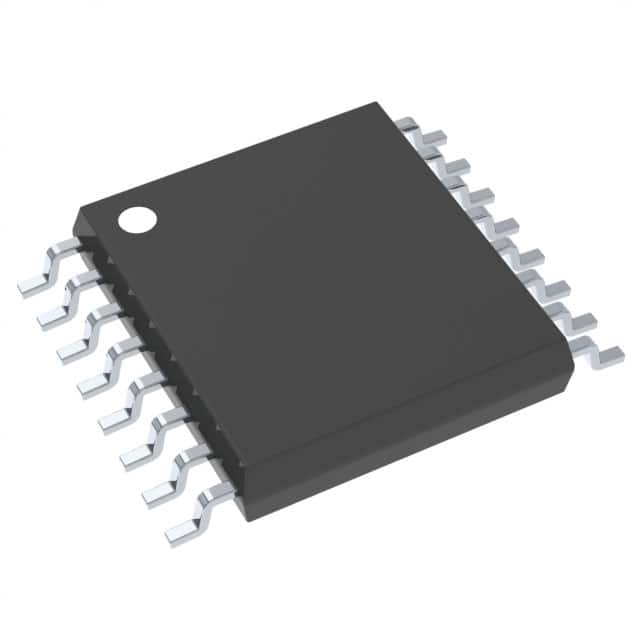
The DS90LV032ATMTC/NOPB from Texas Instruments is a quad CMOS differential line receiver featuring Low Voltage Differential Signaling (LVDS) technology. It is designed to handle data rates exceeding 400 Mbps (200 MHz) and accepts low voltage differential input signals, translating them to 3-V CMOS output levels.
Key electrical specifications include a signaling rate of 400 Mbps, a typical channel-to-channel skew of 0.1 ns, and a maximum propagation delay of 3.3 ns. The device operates with a 3.3V power supply, with a range of 3V to 3.6V, and exhibits low power consumption, dissipating only 40 mW at 3.3V static. It is interoperable with existing 5-V LVDS networks and accepts input swings as low as 350 mV typical.
This receiver supports fail-safe conditions for open, shorted, and terminated inputs, with the output being HIGH in all fail-safe scenarios. It is available in a 16-TSSOP package suitable for surface mounting. The operating temperature range is -40°C to 85°C, making it suitable for industrial applications.
| Qty | Low | High |
|---|---|---|
| 1+ | $1.37 | $1.37 |
Estimated market price range - modelled values for guidance only, not live distributor offers.
The signaling rate is 400 Mbps.
The operating voltage range is 3V to 3.6V.
The operating temperature range is -40°C to 85°C.
It is supplied in a 16-TSSOP package.
This receiver uses the LVDS protocol.
There are 4 receivers available.