

| Distributor | Stock | Pricing | MOQ | PKG | Lead Time | Date Code | On Order Quantity | On Order Delivery | |
|---|---|---|---|---|---|---|---|---|---|
|
45,200 pcs
|
45200 pcs | On Request | 1 | On Request | On Request | On Request | On Request | On Request | |
|
25,867 pcs
|
25867 pcs | On Request | 1 | On Request | On Request | On Request | On Request | On Request | |
|
238 pcs
|
238 pcs | On Request | 1 | On Request | On Request | 1301+ | On Request | On Request |
| Category | |
| Manufacturer Name | |
| Data Rate | |
| Mounting Type | |
| Number of Drivers | |
| Operating Temperature | |
| Package Quantity | |
| Power Dissipation | |
| Propagation Delay | |
| Protocol | |
| Supplier Device Package | |
| Type | |
| Voltage |
The DS90LV017ATM/NOPB from Texas Instruments is a single LVDS driver optimized for high data rate and low power consumption. This current mode driver maintains low power dissipation even at high frequencies and minimizes short circuit fault current. It supports data rates in excess of 600 Mbps (300 MHz) utilizing Low Voltage Differential Signaling (LVDS) technology.
Key electrical characteristics include a 3.3V power supply, ±355 mV differential signaling, and low power dissipation of 23 mW at 3.3V static. The device features a typical differential skew of 0.3 ns and a maximum of 0.7 ns, with a maximum propagation delay of 1.5 ns. It is interoperable with existing 5V LVDS devices and includes power-off protection, with outputs in high impedance.
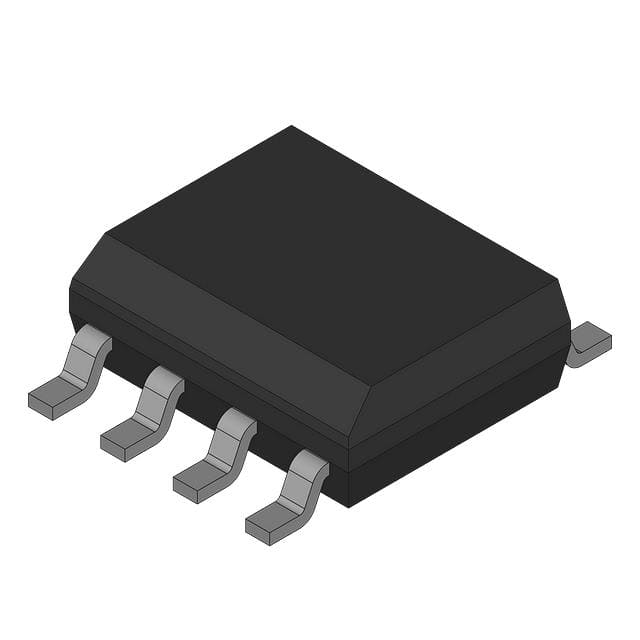
The DS90LV017ATM/NOPB conforms to the TIA/EIA-644 Standard and is housed in a space-saving 8-lead SOIC package. Its flow-through design simplifies PCB layout. The device operates within an industrial temperature range of -40°C to +85°C.
| Qty | Low | High |
|---|---|---|
| 1+ | $0.65 | $0.65 |
Estimated market price range - modelled values for guidance only, not live distributor offers.
The operating voltage is 3V to 3.6V.
It is supplied in an 8-SOIC package.
The operating temperature range is -40°C to 85°C.
It supports data rates exceeding 600 Mbps.
The typical differential skew is 0.3 ns.
The maximum propagation delay is 1.5 ns.