

| Distributor | Stock | Pricing | MOQ | PKG | Lead Time | Date Code | On Order Quantity | On Order Delivery | |
|---|---|---|---|---|---|---|---|---|---|
|
16,436 pcs
|
16436 pcs | On Request | 1 | On Request | On Request | On Request | On Request | On Request | |
|
4,943 pcs
|
4943 pcs | On Request | 1 | On Request | On Request | On Request | On Request | On Request |
| Category | |
| Manufacturer Name | |
| Bandwidth | |
| Data Rate | |
| Lead Spacing | |
| Mounting Type | |
| Number of Drivers | |
| Operating Temperature | |
| Protocol | |
| Supplier Device Package | |
| Type | |
| Voltage |
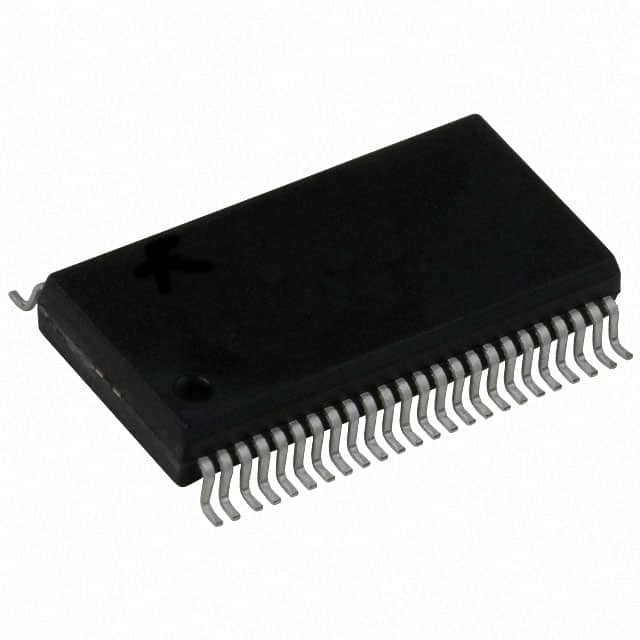
The DS90C365AMT/NOPB from Texas Instruments is a 18-bit Flat Panel Display Link (FPD-Link) transmitter operating at up to 87.5 MHz. This device supports a data rate of up to 1.785 Gbps and a bandwidth of 223.125 MB/s, making it suitable for high-resolution display applications.
Key electrical characteristics include a programmable LVDS output with a typical swing of 345 mV for low EMI, and a wide operating voltage range of 3V to 3.6V. The transmitter consumes less than 146 mW typically at 87.5 MHz and features a low power-down mode for grayscale applications.
Designed for ease of use, the DS90C365AMT/NOPB does not require a special start-up sequence and supports spread spectrum clocking. It features an input clock detection mechanism that pulls LVDS pairs low when the input clock is missing. The device is compliant with the TIA/EIA-644 LVDS standard.
Packaged in a low-profile 48-lead TSSOP, the DS90C365AMT/NOPB is designed for surface mounting. It is pin-to-pin compatible with other DS90C36x series devices, offering flexibility in design.
| Qty | Low | High |
|---|---|---|
| 1+ | $3.49 | $3.49 |
Estimated market price range - modelled values for guidance only, not live distributor offers.
The operating voltage range is 3 V to 3.6 V.
The operating temperature range is -10°C to 70°C.
The DS90C365AMT/NOPB is available in a 48-TSSOP package.
The RoHS status is RoHS3 Compliant.
The MSL rating is Level-1 Unlimited.
The maximum data rate is 1.785 Gbps.
It supports FPD-Link and LVDS protocols.