

| Distributor | Stock | Pricing | MOQ | PKG | Lead Time | Date Code | On Order Quantity | On Order Delivery | |
|---|---|---|---|---|---|---|---|---|---|
|
4,000 pcs
|
4000 pcs | On Request | 1 | On Request | On Request | On Request | On Request | On Request | |
|
395 pcs
|
395 pcs | On Request | 1 | On Request | On Request | On Request | On Request | On Request | |
|
286 pcs
|
286 pcs | On Request | 1 | On Request | On Request | On Request | On Request | On Request | |
|
242 pcs
|
242 pcs | On Request | 1 | On Request | On Request | On Request | On Request | On Request | |
|
13 pcs
|
13 pcs | On Request | 1 | On Request | On Request | 98+ | On Request | On Request |
| Category | |
| Manufacturer Name | |
| Lead Spacing | |
| Mounting Type | |
| Number of Drivers | |
| Operating Temperature | |
| Propagation Delay | |
| Protocol | |
| Supplier Device Package | |
| Tape & Reel | |
| Type | |
| Voltage |
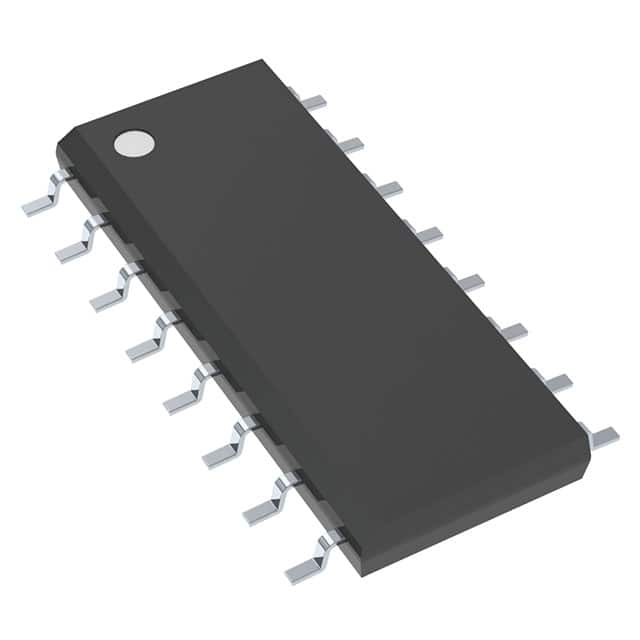
The Texas Instruments DS90C031TM is a quad CMOS differential line driver designed for high-speed data transmission applications. It supports data rates exceeding 155.5 Mbps using Low Voltage Differential Signaling (LVDS) technology.
This driver accepts TTL/CMOS input levels and translates them into low voltage (350 mV) differential output signals. It features an ultra-low power dissipation and a TRI-STATE function to disable the output stage, reducing idle power consumption to a typical 11 mW. The device offers a maximum differential skew of 400 ps and a maximum propagation delay of 3.5 ns.
Designed for industrial applications, the DS90C031TM operates within a temperature range of -40°C to 85°C. It is available in a 16-SOIC surface mount package. This component conforms to the ANSI/TIA/EIA-644 LVDS standard and is pin-compatible with other devices like DS26C31, MB571, and 41LG.
The signaling rate is greater than 155.5 Mbps.
It supports LVDS protocol for output signals and accepts CMOS, TTL input signals.
The operating voltage range is 4.5V to 5.5V.
The operating temperature range is -40°C to 85°C.
The DS90C031TM is available in a 16-SOIC package.
The typical idle power dissipation is 11 mW.