

| Distributor | Stock | Pricing | MOQ | PKG | Lead Time | Date Code | On Order Quantity | On Order Delivery | |
|---|---|---|---|---|---|---|---|---|---|
|
132 pcs
|
132 pcs | On Request | 1 | On Request | On Request | On Request | On Request | On Request | |
|
100 pcs
|
100 pcs | On Request | 1 | On Request | On Request | On Request | On Request | On Request | |
|
45 pcs
|
45 pcs | On Request | 1 | On Request | On Request | On Request | On Request | On Request |
| Category | |
| Manufacturer Name | |
| Duplex | |
| Lead Spacing | |
| Mounting Type | |
| Number of Drivers | |
| Operating Temperature | |
| Propagation Delay | |
| Protocol | |
| Receiver Hysteresis | |
| Supplier Device Package | |
| Tape & Reel | |
| Type | |
| Voltage |
The DS34C86T is a quad differential line receiver from Texas Instruments, built with CMOS technology for low power consumption. It is designed to meet RS-422, RS-423, and Federal Standards 1020 and 1030 for digital data transmission.
Key electrical characteristics include an input sensitivity of ±0.2V over a common mode voltage range of ±7V, and typical input hysteresis of 60 mV. This hysteresis enhances noise margin and prevents output instability with slow input waveforms. The device features TRI-STATE outputs for system bus compatibility and an open input failsafe feature that sets the output high when the input is open.
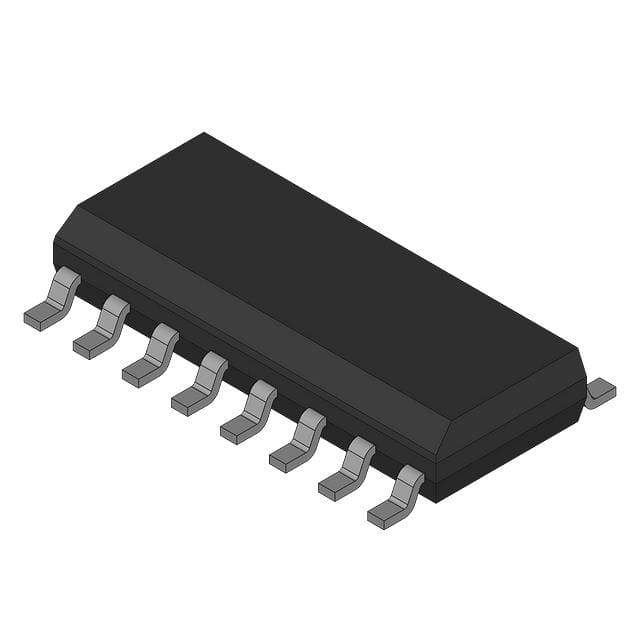
This receiver is suitable for surface mount applications and comes in a 16-SOIC package. It operates within a temperature range of -40°C to 85°C, making it versatile for various industrial and commercial environments. The DS34C86T also offers internal pull-up and pull-down resistors to prevent oscillation on unused channels, with separate enable pins for independent control of receiver pairs.
The DS34C86TM is a quad CMOS differential line receiver.
The DS34C86TM supports RS-422 and RS-423 protocols.
The DS34C86TM operates from -40°C to 85°C.
The DS34C86TM is available in a 16-SOIC package.
The input sensitivity of the DS34C86TM is ±0.2V.
Yes, the DS34C86TM has a typical input hysteresis of 60 mV.