

| Distributor | Stock | Pricing | MOQ | PKG | Lead Time | Date Code | On Order Quantity | On Order Delivery | |
|---|---|---|---|---|---|---|---|---|---|
|
36,160 pcs
|
36160 pcs | On Request | 1 | On Request | On Request | On Request | On Request | On Request |
| Category | |
| Manufacturer Name | |
| Differential Output | |
| Length | |
| Mounting Type | |
| Number of Drivers | |
| Operating Temperature | |
| Protocol | |
| Supplier Device Package | |
| Type | |
| Voltage |
The DS26LS31CM/NOPB from Texas Instruments is a quad differential line driver engineered for robust digital data transmission over balanced lines. This component adheres to the specifications of EIA Standard RS-422 and Federal Standard 1020, making it suitable for demanding communication applications.
Featuring TRI-STATE outputs and complementary outputs, the DS26LS31CM/NOPB offers flexibility in system design. It operates from a single 5V supply and provides a typical input-to-output delay of 10 ns with an output skew of 2.0 ns. The device is designed to minimize line loading when VCC is 0V and includes output short-circuit protection.
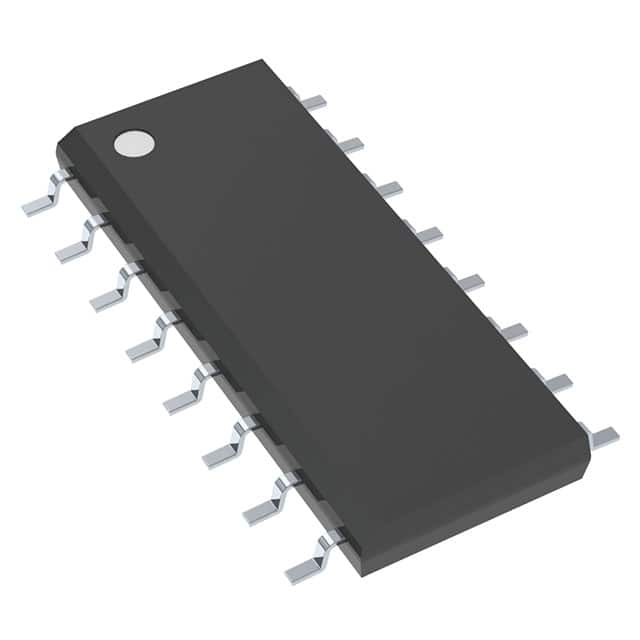
Packaged in a 16-SOIC (0.154", 3.90mm Width) surface-mount form factor, this line driver is ideal for applications requiring high-speed differential signaling. Its operating temperature range is from 0°C to 70°C, ensuring reliable performance in various environments. The component is compatible with the AM26LS31.
This driver is well-suited for applications requiring reliable differential data transmission, such as industrial control systems, communication interfaces, and data acquisition systems where signal integrity over twisted-pair or parallel-wire transmission lines is critical.
The DS26LS31CM/NOPB is a quad differential line driver.
It supports RS422 and RS485 protocols, meeting EIA-422 and FED STD 1020 standards.
The operating voltage is 4.5V to 5.5V.
The operating temperature range is 0°C to 70°C.
It is supplied in a 16-SOIC package.
It features TRI-STATE outputs and complementary outputs.
The typical input to output delay is 10 ns.