| Distributor | Stock | Pricing | MOQ | PKG | Lead Time | Date Code | On Order Quantity | On Order Delivery | |
|---|---|---|---|---|---|---|---|---|---|
|
134 pcs
|
134 pcs | On Request | 1 | On Request | On Request | 1003 | On Request | On Request | |
|
48 pcs
|
48 pcs | On Request | 1 | On Request | On Request | On Request | On Request | On Request | |
|
25 pcs
|
25 pcs | On Request | 1 | On Request | On Request | On Request | On Request | On Request |
| Category | |
| Manufacturer Name | |
| Mounting Type | |
| Number of Drivers | |
| Operating Temperature | |
| Output Current | |
| Propagation Delay | |
| Protocol | |
| Receiver Hysteresis | |
| Supplier Device Package | |
| Type | |
| Voltage |
The DS26C32ATM/NOPB from Texas Instruments is a CMOS quad differential line receiver that meets RS-422, RS-423, and Federal Standards 1020 and 1030. It offers low power consumption and an input sensitivity of 200 mV over a common mode input voltage range of ±7V.
Key electrical characteristics include a typical propagation delay of 19 ns and 60 mV of input hysteresis. The receiver features TRI-STATE outputs with 6 mA source and sink capability, making it suitable for connection to system buses. Unused channels are prevented from output oscillation by internal pull-up and pull-down resistors.
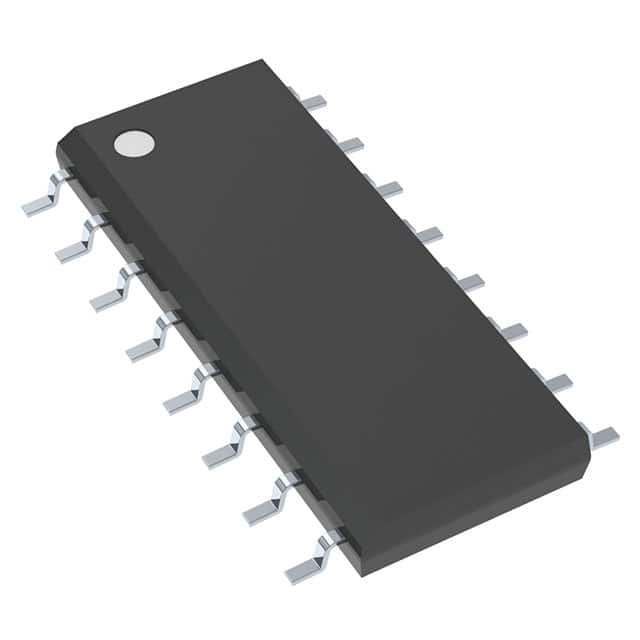
This device is available in a 16-SOIC surface mount package, designed for operation within an ambient temperature range of -40°C to 85°C. It is pin compatible with the DS26LS32A and AM26LS32.
The DS26C32ATM/NOPB is ideal for digital data transmission applications requiring robust differential signaling.

| Qty | Low | High |
|---|---|---|
| 1+ | $1.01 | $1.01 |
Estimated market price range - modelled values for guidance only, not live distributor offers.
The DS26C32ATM/NOPB is a quad differential line receiver.
It supports RS-422, RS-423, and Federal Standards 1020 and 1030.
The operating voltage range is 4.5V to 5.5V.
The operating temperature range is -40°C to 85°C.
It is supplied in a 16-SOIC package.
The typical propagation delay is 19 ns.
The input sensitivity is 200 mV over the common mode input voltage range of ±7V.