

| Distributor | Stock | Pricing | MOQ | PKG | Lead Time | Date Code | On Order Quantity | On Order Delivery | |
|---|---|---|---|---|---|---|---|---|---|
|
4 pcs
|
4 pcs | On Request | 1 | On Request | On Request | On Request | On Request | On Request |
| Category | |
| Manufacturer Name | |
| Duplex | |
| Fault Protection | |
| Interface | |
| Mounting Type | |
| Operating Temperature | |
| Storage Temperature | |
| Supply Current | |
| Tape & Reel |
The National DS16F95J is a monolithic integrated circuit designed for bidirectional data communication on balanced multipoint bus transmission lines. It meets both EIA-485 and EIA-422A standards, offering improved performance through L-FAST bipolar technology for higher speeds and lower currents.
This transceiver operates from a single 5.0V power supply and combines a TRI-STATE differential line driver and a differential input line receiver. The driver is designed to accommodate loads up to 60 mA sink or source current and includes positive and negative current limiting, along with thermal shutdown protection. The receiver features high impedance inputs and typical input hysteresis of 50 mV.
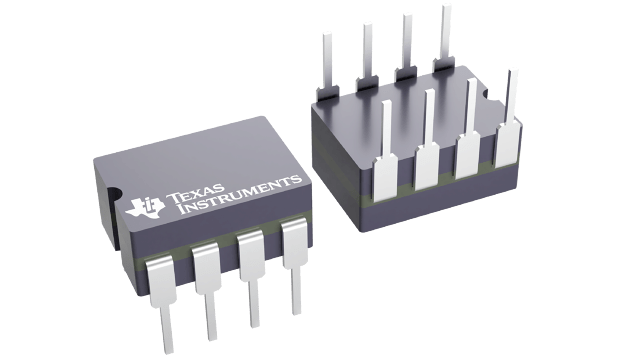
The DS16F95J is suitable for multipoint applications in noisy environments due to its wide positive and negative common mode voltage ranges. It also meets SCSI-1 (5 MHz) specifications. The device is available in various package types including CDIP, LCCC, and CFP, typically with through-hole mounting.
Key features include a maximum signaling rate of 10 Mbps, a common-mode voltage range of -7 to 12 V, and fault protection from -12 to 12 V. It supports up to 32 nodes on the bus and operates within a military temperature range of -55 to 125°C.
| Qty | Low | High |
|---|---|---|
| 1+ | $33.86 | $33.86 |
Estimated market price range - modelled values for guidance only, not live distributor offers.
The DS16F95J meets both EIA-485 and EIA-422A standards.
The maximum signaling rate for the DS16F95J is 10 Mbps.
The DS16F95J operates in a temperature range of -55 to 125°C.
The DS16F95J supports up to 32 nodes on the bus.
The receiver input hysteresis is typically 50 mV.