

| Distributor | Stock | Pricing | MOQ | PKG | Lead Time | Date Code | On Order Quantity | On Order Delivery | |
|---|---|---|---|---|---|---|---|---|---|
|
764 pcs
|
764 pcs | On Request | 1 | On Request | On Request | 1339+ | On Request | On Request | |
|
750 pcs
|
750 pcs | On Request | 1 | On Request | On Request | On Request | On Request | On Request |
| Category | |
| Manufacturer Name | |
| Current | |
| Date Format | |
| Features | |
| Interface | |
| Mounting Type | |
| Operating Temperature | |
| Supplier Device Package | |
| Time Format | |
| Type | |
| Voltage |
The DS1337C from Analog Devices / Maxim Integrated is a serial real-time clock (RTC) designed for low-power applications. It manages all timekeeping functions, including seconds, minutes, hours, day, date, month, and year, with leap-year compensation valid up to 2100. The device features two programmable time-of-day alarms and a programmable square-wave output, defaulting to 32kHz on power-up.
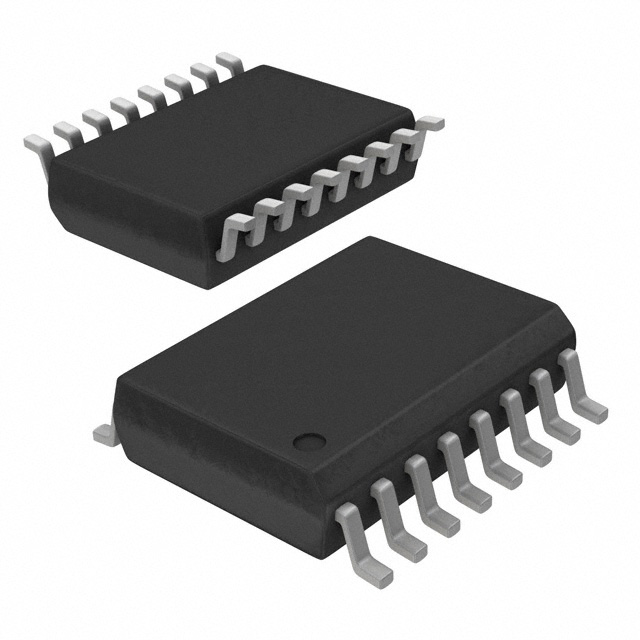
This RTC interfaces with most microcontrollers via an I2C serial interface. It operates within a voltage range of 1.8V to 5.5V, with timekeeping maintained as low as 1.3V. The device is housed in a 16-SOIC surface-mount package, measuring 7.50mm in width, and operates across an industrial temperature range of -40°C to +85°C.
Applications for the DS1337C include handheld devices like GPS and POS terminals, consumer electronics such as set-top boxes, office equipment like fax machines and printers, medical devices including glucometers, and telecommunications equipment like routers and servers. Its integrated features and compact package make it suitable for a wide array of embedded systems requiring accurate timekeeping.
The DS1337C operates within a voltage range of 1.8V to 5.5V.
The operating temperature range for the DS1337C is -40°C to +85°C.
The DS1337C uses an I2C, 2-Wire Serial interface.
The DS1337C is supplied in a 16-SOIC (0.295", 7.50mm Width) package.
The DS1337C is RoHS3 Compliant.
Key features include alarm functions, leap year compensation, and a programmable square-wave output.