

| Distributor | Stock | Pricing | MOQ | PKG | Lead Time | Date Code | On Order Quantity | On Order Delivery | |
|---|---|---|---|---|---|---|---|---|---|
|
4,030 pcs
|
4030 pcs | On Request | 1 | On Request | On Request | On Request | On Request | On Request | |
|
1,362 pcs
|
1362 pcs | On Request | 1 | On Request | On Request | 17+ | On Request | On Request |
| Category | |
| Manufacturer Name | |
| Applications | |
| Control Interface | |
| Current | |
| Function | |
| Interface | |
| Motor Type | |
| Mounting Type | |
| Operating Temperature | |
| Output Configuration | |
| Supplier Device Package | |
| Technology | |
| Voltage |
The DRV8832DGQR from Texas Instruments is a versatile H-bridge motor driver IC suitable for various low-voltage and battery-powered applications. This device integrates control and power stages, enabling it to drive DC motors, stepper motor windings, or other loads like solenoids.
Key electrical specifications include an operating supply voltage range of 2.75V to 6.8V and a peak output current capability of 1.3A, with a continuous RMS current of 1A. It features a low on-resistance (RDS(ON)) of 450 mΩ for efficient operation. The driver supports PWM control for precise speed regulation and operates with a hardware (GPIO) interface.
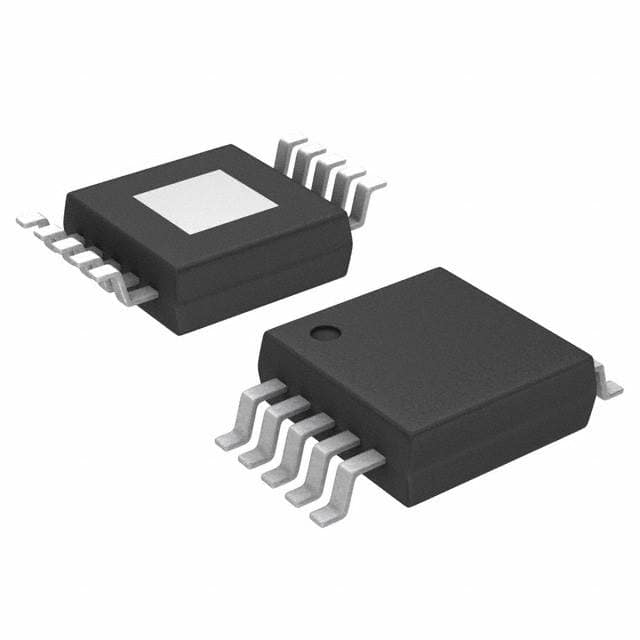
Designed for ease of integration, the DRV8832DGQR is available in compact surface-mount packages such as the 10-HVSSOP and 10-PowerTFSOP/10-MSOP. Its integrated protection features, including overcurrent and overtemperature protection, enhance reliability in demanding applications. The typical sleep mode current is a low 0.3 µA, contributing to extended battery life.
| Qty | Low | High |
|---|---|---|
| 1+ | $1.03 | $1.03 |
Estimated market price range - modelled values for guidance only, not live distributor offers.
The supply voltage range is 2.75V to 6.8V.
The DRV8832DGQR is available in a 10-HVSSOP package (also 10-PowerTFSOP, 10-MSOP).
The operating temperature range is -40°C to 85°C.
Continuous output current is 1A maximum, with peak output current of 1.3A.
It uses PWM control via a hardware GPIO interface.
The typical sleep current is 0.3 µA.