

| Distributor | Stock | Pricing | MOQ | PKG | Lead Time | Date Code | On Order Quantity | On Order Delivery | |
|---|---|---|---|---|---|---|---|---|---|
|
2,500 pcs
|
2500 pcs | On Request | 1 | On Request | On Request | On Request | On Request | On Request |
| Category | |
| Manufacturer Name | |
| Applications | |
| Function | |
| Interface | |
| Motor Type | |
| Mounting Type | |
| Operating Temperature | |
| Output Configuration | |
| Output Voltage | |
| Supplier Device Package | |
| Supplier Package | |
| Technology | |
| Voltage |
The DRV2667RGPR from Texas Instruments is a versatile piezo haptic driver designed for high-voltage and low-voltage piezo haptic actuators. It features an integrated 105-V boost converter, eliminating the need for an external transformer. The device supports HD haptics through its I2C port or analog inputs, offering flexibility in control.
Key electrical specifications include a wide supply voltage range of 3V to 5.5V and a maximum output voltage of 200V. It operates within a temperature range of -40°C to 85°C. The integrated digital front end, advanced waveform synthesizer, and 2-kB internal waveform memory enable sophisticated haptic effects. The device also includes a 100-byte internal FIFO interface and a fast 2-ms start-up time.
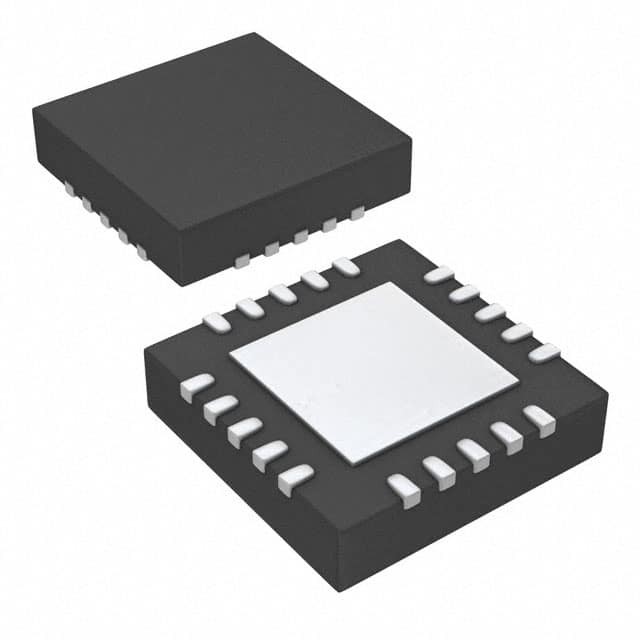
Packaged in a 20-QFN (4x4) format with surface mount mounting type, the DRV2667RGPR is suitable for various applications requiring precise haptic feedback. Its differential output configuration and 1.8V-compatible digital pins further enhance its integration into different designs.
| Qty | Low | High |
|---|---|---|
| 1+ | $1.51 | $1.51 |
Estimated market price range - modelled values for guidance only, not live distributor offers.
The input voltage range is 3 V to 5.5 V.
It is available in a 20-VFQFN exposed pad package, also designated as 20-QFN (4x4), for surface-mount assembly.
The operating temperature range is -40°C to 85°C.
The maximum output voltage is 200 V.
The maximum boost voltage is 105 V.
The I2C bus speed is up to 400 kHz.
It includes 2 kB of internal waveform memory and a 100-byte FIFO interface.