

| Distributor | Stock | Pricing | MOQ | PKG | Lead Time | Date Code | On Order Quantity | On Order Delivery | |
|---|---|---|---|---|---|---|---|---|---|
|
3,566 pcs
|
3566 pcs | On Request | 1 | On Request | On Request | On Request | On Request | On Request |
| Category | |
| Manufacturer Name | |
| Current | |
| Duty Cycle | |
| Independent Circuits | |
| Logic Type | |
| Mounting Type | |
| Operating Temperature | |
| Propagation Delay | |
| Schmitt Trigger Input | |
| Supplier Device Package | |
| Supplier Package | |
| Tape & Reel | |
| Voltage |
The DM74LS123N from ON Semiconductor is a dual retriggerable monostable multivibrator capable of generating output pulses from nanoseconds to long durations with up to 100% duty cycle. This device offers flexibility with inputs for leading or trailing edge triggering and a clear input to terminate pulses. It operates within a voltage range of 4.75V to 5.25V and has a typical current draw of 400µA, with a maximum of 8mA.
Key electrical features include a propagation delay of 45 ns and DTL/TTL compatibility. The multivibrator is compensated for VCC and temperature variations, ensuring stable operation. It contains two independent circuits and features input clamp diodes. The operating temperature range is from 0°C to 70°C.
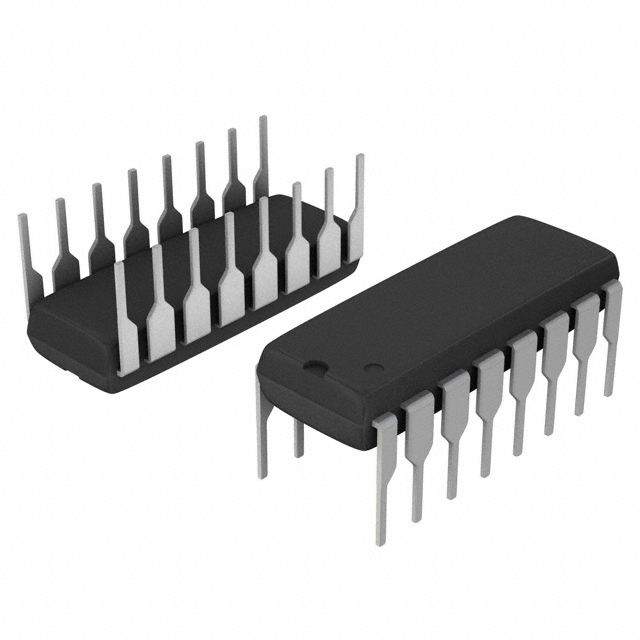
This component is housed in a 16-PDIP package and utilizes through-hole mounting. The DM74LS123N is suitable for various timing and pulse generation applications where precise control and retriggering capabilities are required. Its robust design and compatibility with TTL logic make it a versatile choice for electronic designs.
| Qty | Low | High |
|---|---|---|
| 1+ | $0.50 | $0.50 |
Estimated market price range - modelled values for guidance only, not live distributor offers.
The propagation delay is 45 ns.
The operating voltage range is 4.75 V to 5.25 V.
It is available in a 16-DIP (0.300", 7.62mm) through-hole package (16-PDIP).
The operating temperature range is 0°C to 70°C.
RoHS status is listed as RoHS3 Compliant but is unverified.
No, it does not have a Schmitt trigger input.
It is compatible with DTL and TTL logic families.