

| Distributor | Stock | Pricing | MOQ | PKG | Lead Time | Date Code | On Order Quantity | On Order Delivery | |
|---|---|---|---|---|---|---|---|---|---|
|
2,500 pcs
|
2500 pcs | On Request | 1 | On Request | On Request | On Request | On Request | On Request | |
|
1,086 pcs
|
1086 pcs | On Request | 1 | On Request | On Request | On Request | On Request | On Request |
| Category | |
| Manufacturer Name | |
| Architecture | |
| Data Interface | |
| Differential Output | |
| INL | |
| Mounting Type | |
| Number of Bits | |
| Number of D | |
| Operating Temperature | |
| Output Type | |
| Power Consumption | |
| Reference Type | |
| Settling Time | |
| Supplier Device Package | |
| Supplier Package | |
| Voltage |
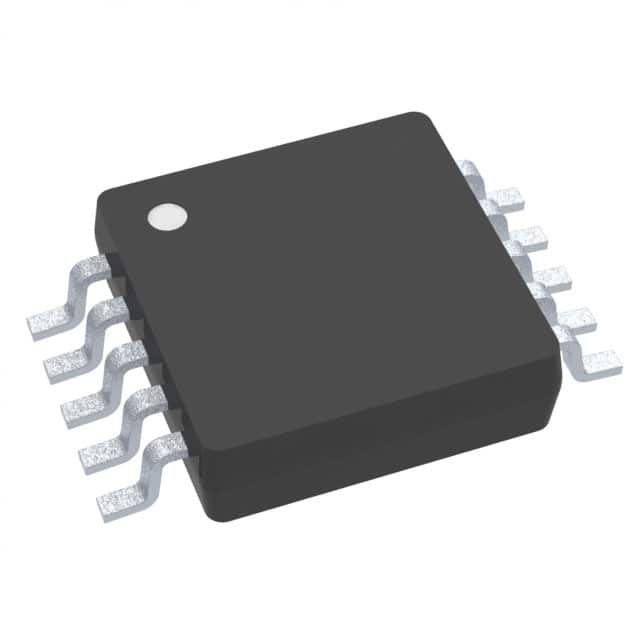
The Texas Instruments DAC7562SDGSR is a 12-bit, dual-channel digital-to-analog converter (DAC) designed for general-purpose applications. It offers a buffered voltage output and supports an SPI interface for data communication.
Key electrical specifications include a 12-bit resolution, an output voltage range of 0 to 5V, and a typical settling time of 10µs. The device operates over a wide voltage supply range of 2.7V to 5.5V and features low power consumption, typically 0.5mW. It also includes an internal reference option with a temperature drift of 4ppm/°C (typical).
This DAC is available in a 10-VSSOP package and is designed for surface mount applications. The operating temperature range is -40°C to 125°C, making it suitable for various environmental conditions. The DAC7562SDGSR is characterized by its low glitch impulse and rail-to-rail output buffer operation.
| Qty | Low | High |
|---|---|---|
| 1+ | $2.78 | $2.78 |
Estimated market price range - modelled values for guidance only, not live distributor offers.
The DAC7562SDGSR has a resolution of 12 bits.
The DAC7562SDGSR features 2 DAC channels.
The DAC7562SDGSR supports SPI and DSP interfaces.
The output type is Voltage - Buffered.
The operating temperature range is -40°C to 125°C.
The typical power consumption is 0.5mW.
The typical settling time is 10µs.