

| Distributor | Stock | Pricing | MOQ | PKG | Lead Time | Date Code | On Order Quantity | On Order Delivery | |
|---|---|---|---|---|---|---|---|---|---|
|
4,305 pcs
|
4305 pcs | On Request | 1 | On Request | On Request | On Request | On Request | On Request |
| Category | |
| Manufacturer Name | |
| Architecture | |
| Halogen Free | |
| Operating Temperature Range | |
| Reference Type | |
| Resolution | |
| SVHC Present |
The Texas Instruments DAC2900Y is a monolithic, 10-bit, dual-channel, high-speed Digital-to-Analog Converter (DAC). It is optimized for high dynamic performance while consuming only 310mW on a +5V single supply. Operating at update rates up to 125MSPS, the DAC2900Y enables the generation of very-high output frequencies suitable for Direct IF applications.
This DAC features a parallel CMOS interface and a current source architecture. It offers a typical SFDR of 80dB and a high SFDR of 68dB at an output frequency of 20MHz. The device operates within a temperature range of -40°C to 85°C and supports both external and internal reference types.
The DAC2900Y is designed for communications applications, including base stations, WLL, and WLAN, as well as baseband I/Q modulation. It is also suitable for medical/test instrumentation, arbitrary waveform generators (ARB), and direct digital synthesis (DDS). The device is pin compatible with other family members like the DAC2902 (12-bit) and DAC2904 (14-bit), and also the AD9763 dual DAC.
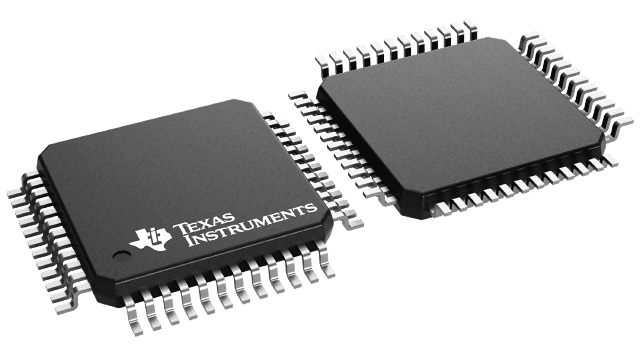
The DAC2900Y is available in a TQFP (PFB) package measuring 9 mm x 9 mm (81 mm²). It supports single supply operation of +3.3V or +5V.
| Qty | Low | High |
|---|---|---|
| 1+ | $0.99 | $0.99 |
Estimated market price range - modelled values for guidance only, not live distributor offers.
The DAC2900Y has a resolution of 10 bits.
The DAC2900Y has two DAC channels.
The maximum update rate is 125 MSPS.
The operating temperature range is -40°C to +85°C.
The DAC2900Y is available in a 48-pin TQFP (PFB) package measuring 9mm x 9mm.
Typical power consumption is 310mW at +5V supply.
Yes, the power-down mode consumes 23mW.