

| Distributor | Stock | Pricing | MOQ | PKG | Lead Time | Date Code | On Order Quantity | On Order Delivery | |
|---|---|---|---|---|---|---|---|---|---|
|
800 pcs
|
800 pcs | On Request | 1 | On Request | On Request | On Request | On Request | On Request |
| Category | |
| Manufacturer Name | |
| Clock Frequency | |
| Current | |
| Function | |
| Input Capacitance | |
| Lead Style | |
| Max Propagation Delay @ V, Max CL | |
| Mounting Type | |
| Number of Bits per Element | |
| Number of Elements | |
| Operating Temperature | |
| Output Type | |
| Supplier Device Package | |
| Tape & Reel | |
| Trigger Type | |
| Type | |
| Voltage |
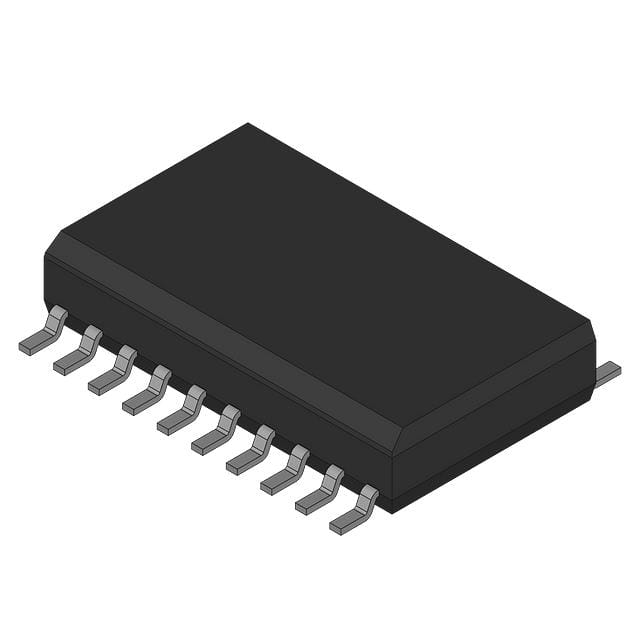
The CD74HCT574M96 is an octal positive-edge-triggered D-type flip-flop with 3-state outputs, manufactured by Texas Instruments. This logic IC is designed for high-speed CMOS applications, offering direct LSTTL input logic compatibility.
Key electrical characteristics include an operating voltage range of 4.5V to 5.5V, a typical quiescent current of 8 µA, and a maximum propagation delay of 15 ns at 5V and 15 pF. The device features buffered inputs and common three-state output enable control, making it suitable for bus line driving capability.
Packaged in a 20-SOIC (Surface Mount) format, the CD74HCT574M96 is designed for a wide operating temperature range of -55°C to 125°C. Its balanced propagation delay and transition times, along with significant power reduction compared to LSTTL, make it a versatile component for various digital logic designs.
This flip-flop is ideal for applications requiring data storage and buffering in digital systems. Its 3-state outputs allow for efficient bus interfacing, and its high noise immunity ensures reliable operation in demanding environments.
| Qty | Low | High |
|---|---|---|
| 1+ | $0.31 | $0.31 |
Estimated market price range - modelled values for guidance only, not live distributor offers.
The operating voltage range is 4.5V to 5.5V.
The device is available in a 20-SOIC surface-mount package.
The operating temperature range is -55°C to 125°C.
It stores 8 bits per element.
The maximum clock frequency is 60MHz.
The outputs are tri-state and non-inverted.
The maximum propagation delay is 15ns at 5V and 15pF.