

| Distributor | Stock | Pricing | MOQ | PKG | Lead Time | Date Code | On Order Quantity | On Order Delivery | |
|---|---|---|---|---|---|---|---|---|---|
|
136 pcs
|
136 pcs | On Request | 1 | On Request | On Request | On Request | On Request | On Request |
| Category | |
| Manufacturer Name | |
| Count Rate | |
| Direction | |
| Features | |
| Function | |
| Input Type | |
| Lead Spacing | |
| Lead Style | |
| Logic Type | |
| Mounting Type | |
| Number of Bits per Element | |
| Number of Elements | |
| Operating Temperature | |
| Output Type | |
| Reset | |
| Supplier Device Package | |
| Trigger Type | |
| Voltage |
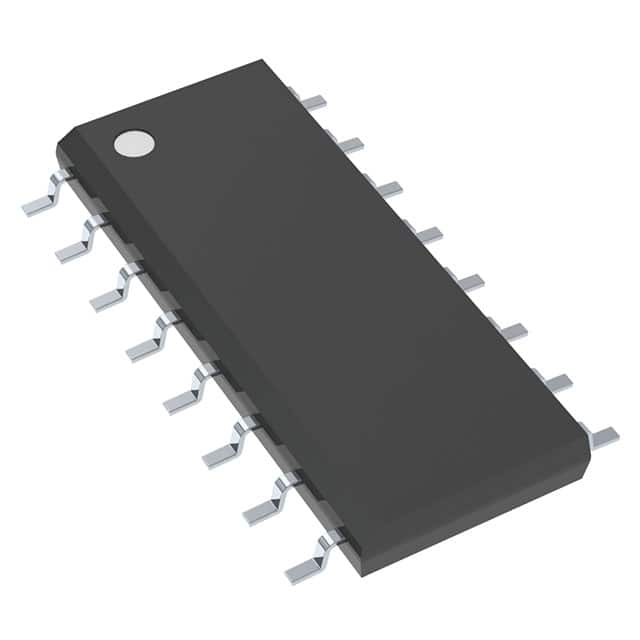
The Texas Instruments CD74HC390M is a high-speed CMOS logic dual decade ripple counter. This component is designed for digital counting applications and features two independent decade counters within a single package.
Key electrical specifications include a wide operating voltage range from 2V to 6V and a count rate of up to 35 MHz. The counter utilizes a standard CMOS input type and a push-pull output type, with asynchronous reset capabilities. It operates on the negative edge of the clock signal.
Packaged in a 16-SOIC form factor, the CD74HC390M is suitable for surface mount applications. The operating temperature range is -55°C to 125°C, making it robust for various environmental conditions. This device is part of the HC (High-Speed CMOS) logic family, known for its balance of speed and low power consumption.
This counter is ideal for applications requiring digital frequency division or sequential counting operations. Its dual-counter design allows for flexible implementation in complex digital systems.
| Qty | Low | High |
|---|---|---|
| 1+ | $0.48 | $0.48 |
Estimated market price range - modelled values for guidance only, not live distributor offers.
The operating voltage range is 2V to 6V.
The CD74HC390M is available in a 16-SOIC package.
The operating temperature range is -55°C to 125°C.
The RoHS status is RoHS3 Compliant.
The Moisture Sensitivity Level is 1 Unlimited.
The count rate is 35 MHz.
Each element has 4 bits.