

| Distributor | Stock | Pricing | MOQ | PKG | Lead Time | Date Code | On Order Quantity | On Order Delivery | |
|---|---|---|---|---|---|---|---|---|---|
|
20,000 pcs
|
20000 pcs | On Request | 1 | On Request | On Request | On Request | On Request | 2026-02-16 21:33:16 | |
|
964 pcs
|
964 pcs | On Request | 1 | On Request | On Request | On Request | On Request | On Request |
| Category | |
| Manufacturer Name | |
| Applications | |
| Bandwidth | |
| Mounting Type | |
| Multiplexer | |
| Number of Channels | |
| Operating Temperature | |
| Pitch | |
| Supplier Device Package | |
| Voltage |
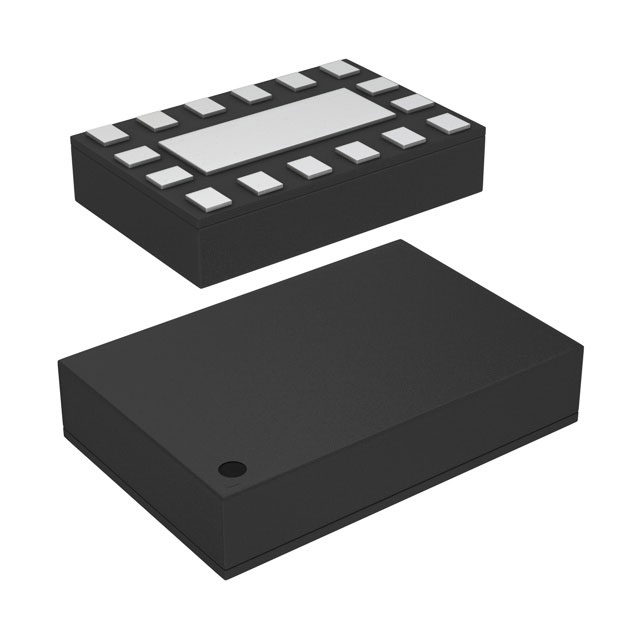
The CBTU02043HEJ from NXP Semiconductors is a high-speed differential 1-to-2 switch chip optimized for USB Type-C connector interfaces in mobile and PC applications. This switch chip is suitable for single-port USB3.1, PCIe-Gen3, and MIPI high-speed serial interface applications. It can also support DP1.4 or 4 single-ended DDR channels, and provides a 2-to-1 MUX function.
Key electrical specifications include a bandwidth of 12 GHz, low insertion loss of -0.5 dB at 100 MHz and -1.4 dB at 5 GHz, and low off-state isolation of -40 dB at 100 MHz. The ON-state resistance is typically 10 Ω, with very low DDNEXT crosstalk below -37 dB at 5 GHz. The device operates over a wide power supply voltage range of 1.62 V to 3.63 V and features low current consumption, with 200 μA in active mode and 3 μA in power-saving mode.
The pinouts are optimized for USB3.1 Type-C DeMUX applications, minimizing crosstalk to meet stringent USB Type-C requirements. The CBTU02043HEJ is available in a compact 1.6 mm x 2.4 mm x 0.5 mm HUQFN16 package with a 0.4 mm pitch, making it ideal for smartphone USB Type-C applications. It operates within an ambient temperature range of -40 °C to 85 °C.
The operating voltage range is 1.62 V to 3.63 V.
The CBTU02043HEJ is available in a 16-HUQFN (1.6x2.4 mm) package.
The operating temperature range is -40°C to 85°C.
The bandwidth is 12 GHz.
The typical ON-state resistance is 10 Ω.
The insertion loss is -0.5 dB at 100 MHz.
The off-state isolation is -20 dB at 5 GHz.