Ready to onboard?
Are you ready to join DistyParts and
grow your business?


| Distributor | Stock | Pricing | MOQ | PKG | Lead Time | Date Code | On Order Quantity | On Order Delivery | |
|---|---|---|---|---|---|---|---|---|---|
|
2,915 pcs
|
2915 pcs | On Request | 1 | On Request | On Request | 1215+ | On Request | On Request | |
|
1,470 pcs
|
1470 pcs | On Request | 1 | On Request | On Request | On Request | On Request | On Request |
| Category | |
| Manufacturer Name | |
| Approval Agency | |
| Current | |
| Mounting Type | |
| Number of Channels | |
| Operating Temperature | |
| Output Type | |
| Static dV | |
| Supplier Device Package | |
| Supplier Package | |
| Trigger Current | |
| Voltage | |
| Zero Crossing Circuit |
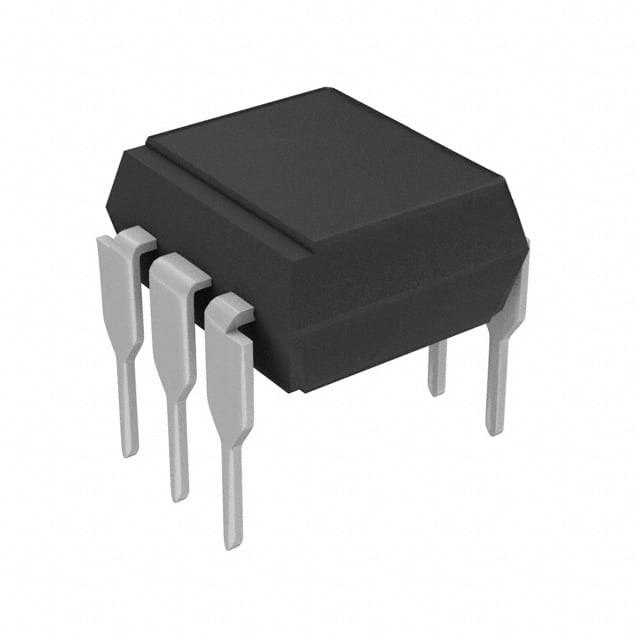
The Vishay Dale BRT13H is an AC optocoupler with a phototriac output, designed for non-zero voltage detection. It integrates a thyristor system, photo detector, and noise suppression.
Key electrical specifications include a continuous RMS current of 300 mA and an isolation voltage of 5300 Vrms. It boasts a high static dV/dt of 10 kV/µs and a low trigger current (IFT < 2 mA). The device operates within a temperature range of -40°C to 100°C.
This optocoupler is suitable for applications requiring electrical isolation between input and output circuits, such as industrial controls, office equipment, and consumer appliances. It features a Triac output and does not have a zero-crossing circuit.
The BRT13H is supplied in a 6-DIP through-hole package, measuring 6-DIP (0.300", 7.62mm). It is agency approved by CQC and UL.
| Qty | Low | High |
|---|---|---|
| 1+ | $0.99 | $0.99 |
Estimated market price range - modelled values for guidance only, not live distributor offers.
The BRT13H optocoupler has an RMS current rating of 300 mA.
The BRT13H optocoupler has an isolation voltage of 5300 Vrms.
The BRT13H operates within a temperature range of -40°C to 100°C.
No, the BRT13H does not have a zero crossing circuit.
The BRT13H optocoupler provides a Triac output.
The trigger current for the BRT13H optocoupler is less than 2 mA.